Procurement Challenges in Construction
Procurement is a critical area where construction projects often face inefficiencies and cost overruns. Missteps such as approving overpriced material requisitions or overlooking vendor payment terms can erode margins significantly. Relying on spreadsheets, emails, and fragmented tools can lead to disorganization and increased costs.
The Role of Unified Procurement Workflows
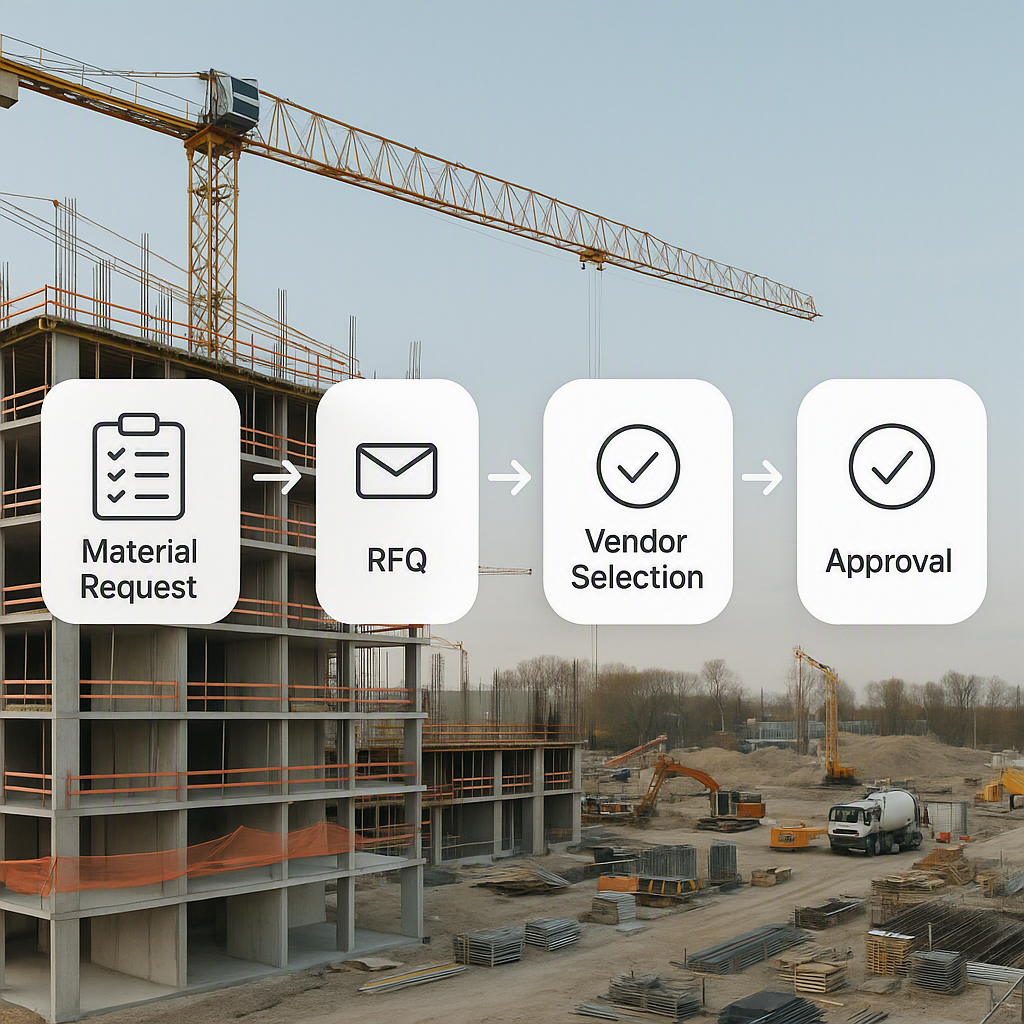
Enterprise software solutions address these challenges by introducing structured procurement workflows. These workflows typically follow a sequence such as: Material Request (MR) → Request for Quotation (RFQ) → Vendor Offers → Purchase Order (PO). Each step is controlled, logged, and tied back to approved budgets, ensuring transparency and accountability.
Here’s a breakdown of a typical workflow:
- Material Request (MR): Site teams raise MRs directly in the system, specifying quantities and delivery dates.
- Request for Quotation (RFQ): Procurement generates RFQs based on the MR. Vendors receive these requests via a centralized system, reducing reliance on scattered communication methods.
- Vendor Offers: Vendors submit quotes directly into the system, enabling side-by-side comparisons to identify the best options.
- Purchase Order (PO): Once a vendor is selected, the PO is generated and routed through configurable approval workflows. The PO is directly linked to the MR and BOQ (bill of quantities), ensuring alignment with project scope.
Benefits of Unified Workflows
Structured procurement workflows offer several advantages:
- Budget Discipline: Every MR and PO is checked against the approved project budget, flagging potential overruns early.
- Vendor Transparency: All RFQs and offers are logged, creating an audit trail and reducing disputes.
- Approval Controls: Multi-level approvals ensure that decisions are reviewed and validated, minimizing errors and unauthorized spending.
Illustrative Example — Vendor Evaluation
Imagine managing a construction project where you need to procure materials like copper wiring. Without a clear workflow, the following issues might arise:
- The site team requests materials but omits critical specifications.
- Procurement sends informal RFQs to a limited set of vendors, missing key suppliers.
- Vendors submit quotes with varying terms, and hidden costs are overlooked.
- A vendor is selected based on incomplete information, leading to unexpected expenses.
With a structured workflow and vendor evaluation tools, such issues can be avoided. Features like side-by-side comparisons and scoring based on price, delivery performance, and reliability help ensure informed decision-making.
Addressing Common Concerns
“My team knows our vendors. Why do we need a system?”
A centralized system retains vendor history and performance data, ensuring continuity even if key personnel leave.
“We don’t have the budget for this software.”
Consider the potential savings from reduced procurement errors and improved efficiency. These often outweigh the cost of implementing an enterprise solution.
“We’ve done fine without it so far.”
Manual processes can lead to inefficiencies and thinner margins. A structured system helps optimize operations and protect profitability.
Common Mistakes to Avoid
- Skipping Vendor Evaluation: Always assess offers beyond price, considering delivery terms and reliability.
- Bypassing Approvals: Fast-tracking orders without proper approvals can lead to costly mistakes.
- Ignoring the BOQ Link: Purchases not tied to the BOQ should be flagged and reviewed.
Final Thoughts
Procurement inefficiencies can significantly impact project margins. By adopting enterprise software solutions with structured workflows, businesses can enhance budget discipline, improve vendor management, and protect profitability. If you’re looking to optimize your procurement process, consider exploring enterprise solutions tailored to your industry needs.
Learn more at JobNext.ai - Construction ERP