What Are Enterprise Software Solutions and How They Transform Businesses
If you're managing complex projects or operations, you may have experienced the challenges of juggling multiple disconnected tools. A tendering platform here, an HR system there, and a spreadsheet for procurement. While these tools may seem effective individually, they often lead to inefficiencies, errors, and delays when workflows are not integrated.
The Problem with Disconnected Tools
For years, businesses relied on specialized tools for every function, believing that "best-in-class" software for each task was the ideal solution. However, this approach often creates silos, increases manual effort, and makes compliance more challenging. Disconnected systems can lead to revenue leakage, unbilled work, and errors that escalate into costly issues.
Why Unified Enterprise Software Solutions Matter
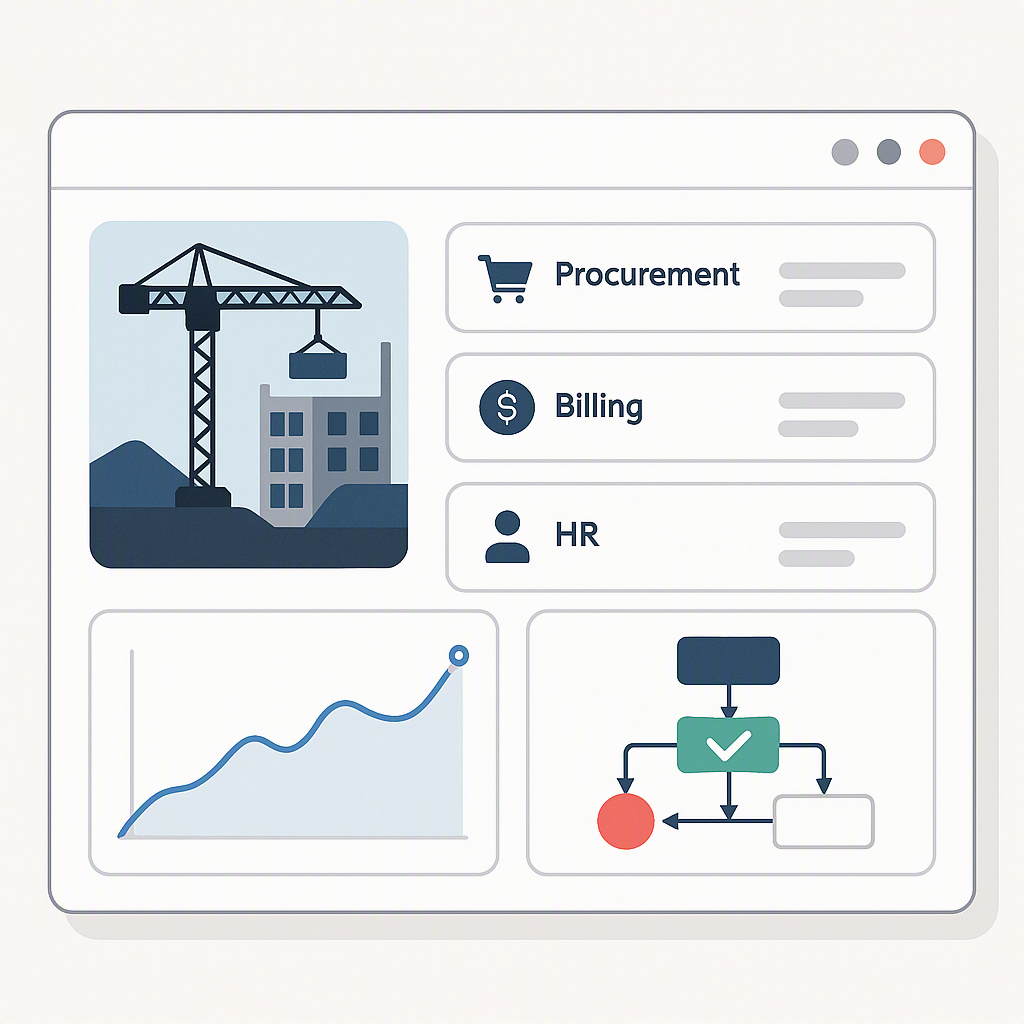
Enterprise software solutions, such as unified ERP platforms, aim to centralize workflows across various functions—procurement, billing, HR/payroll, accounting, and more. By integrating these processes, businesses can reduce inefficiencies, improve accuracy, and enhance compliance.
Illustrative example — Consider a procurement workflow: a structured Material Request (MR) → RFQ → PO process ensures that every purchase is validated against approved budgets, reducing the risk of cost overruns. Similarly, billing modules in unified systems can support multiple billing methods, ensuring completed work is invoiced correctly and preventing revenue leakage.
Benefits of Enterprise Software Solutions
- Streamlined Workflows: Centralized systems eliminate the need for manual data transfers between tools, reducing errors and saving time.
- Improved Compliance: Automated features like GST/TDS computation and statutory deductions ensure adherence to regulations.
- Enhanced Profitability: Real-time margin tracking and integrated reporting help managers identify and address issues proactively.
- Scalability: Unified platforms can adapt to evolving business needs, supporting growth without compromising functionality.
Common Concerns About Switching
Many businesses hesitate to adopt unified platforms due to fears of high costs or disruptions to existing workflows. However, modern SaaS solutions offer flexible pricing models and faster ROI by reducing inefficiencies and manual effort.
FAQ
1. How does a unified ERP improve profitability? By centralizing workflows, it eliminates manual errors, unbilled work, and duplicate costs. Real-time margin tracking alerts managers to issues before they escalate.
2. Why are disconnected tools risky? They create silos, increase manual effort, and make compliance harder. Mistakes often go unnoticed until they cause major financial damage.
3. Is switching to a unified platform expensive? It depends on the provider, but SaaS platforms often offer flexible pricing and faster ROI by reducing inefficiencies.
4. What industries benefit most from unified ERPs? Construction, facilities management, and contracting businesses. However, any multi-site operation can benefit from streamlining workflows.
5. How does enterprise software handle compliance? It automates GST/TDS computation, statutory deductions (PF, ESI), and integrates with accounting systems for reporting. Compliance with regional regulations, such as GCC VAT, is also supported.
Conclusion
Enterprise software solutions are transforming businesses by unifying workflows, reducing inefficiencies, and improving profitability. If you're considering a shift to a unified platform, evaluate your current processes and identify areas where integration could deliver the most value.
Learn more at JobNext.ai - Construction ERP