The Problem with Manual Procurement Processes in Contracting
Let’s start with a scene that’s too familiar. A project manager gets a call from the site: they’re out of rebar. The foreman insists he placed the material requisition weeks ago. The procurement department swears they never saw it. A phone call to the vendor reveals the real problem: someone faxed an outdated PO, and now the order is delayed by a week.
Sound familiar? This kind of chaos is more common than most contractors will admit. Manual procurement processes are often slow, error-prone, and prone to finger-pointing. And the costs add up. Late deliveries delay projects, strained vendor relationships lead to higher prices, and disorganized approvals can leave your margins in tatters.
But let’s be honest: even if you know this is a problem, fixing it isn’t easy. It means changing how your team works, and contractors are notoriously resistant to change. So, where do you start?
Why the Old Way Persists
For years, many believed procurement was just about “getting it done.” Get the materials on-site, pay the vendors, and move on. If something went wrong, a few phone calls and a little yelling usually got things back on track.
And to be fair, that worked — kind of. But it was a bandaid approach, and it didn’t scale. Once multiple projects were running simultaneously, the cracks in the system turned into gaping holes. Duplicate orders. Missed deliveries. Over-budget purchases. It was a mess.
So why did teams stick with it? Because manual processes feel faster in the moment. Need approval? Just walk over to the boss’s desk. Vendor quote missing? Call them directly. But these shortcuts only work when the team is small and the projects are simple. Add complexity, and the inefficiencies multiply.
The Real Costs of Manual Procurement
Here’s what no one tells you: the inefficiencies in manual procurement are cumulative. Small errors here and there snowball into major issues. Let’s break it down:
- Time Costs: Site engineers and project managers waste hours chasing approvals or tracking missing documents. This is time that could be better spent on actual project management.
- Financial Costs: Over-ordering or missing bulk discounts means you’re paying more than you should. Worse, delays caused by poor procurement can lead to penalties and lost revenue.
- Reputation Costs: Repeated delays and errors frustrate clients and vendors alike. Over time, this damages relationships and makes it harder to negotiate favorable rates or win future contracts.
Without a clear system, you’re essentially playing a game of whack-a-mole with problems — and losing.
The Shift: Structured Procurement Workflows
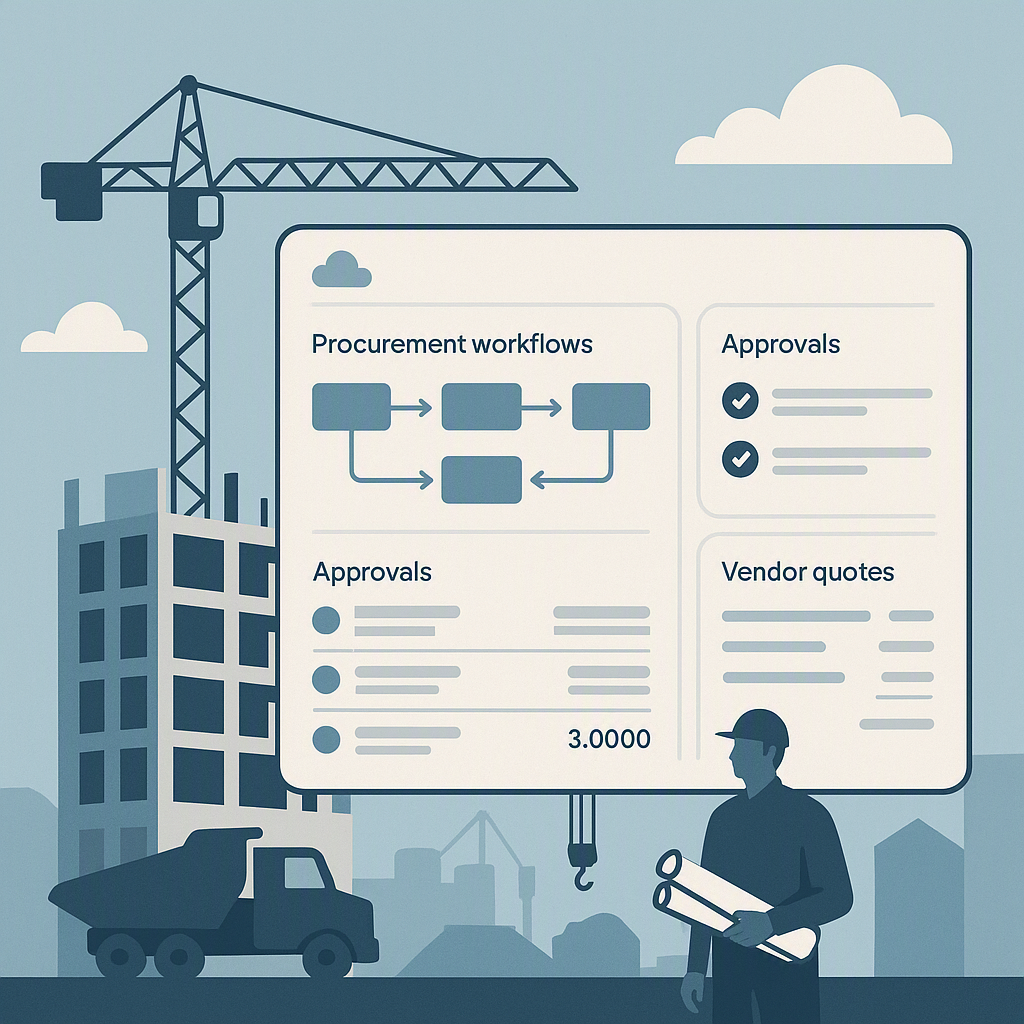
What changed for many contractors was seeing a structured procurement workflow in action. Instead of relying on chaotic mixes of emails, Excel sheets, and WhatsApp messages, they adopted a single, unified process:
- Material requisitions (MR): Created directly in the system by site engineers.
- Request for quotation (RFQ): Automatically triggered and sent to pre-approved vendors.
- Vendor evaluation: Offers evaluated in the system with clear comparisons of price, lead time, and terms.
- Purchase order (PO): Approved vendor offers converted into POs, digitally signed, and sent.
- Full visibility: Every step tracked for project managers and finance.
This approach replaces chaos with clarity. Let’s break down why it works — and how you can make it work for your team.
Benefits of Structured Workflows
A structured workflow like this solves the core problems of manual procurement:
- No More Lost Requests: When material requisitions are logged in a digital system, they can’t be misplaced or forgotten. Many systems let you track the status of every MR in real time.
- Vendor Accountability: By standardizing RFQs and vendor offers, you eliminate guesswork. Every quote is logged, and comparisons are transparent.
- Budget Discipline: Before a PO is issued, the system checks it against the project’s approved budget. This prevents surprise overruns caused by unapproved orders.
- Faster Approvals: Multi-level approval workflows ensure that POs move quickly through the chain of command, but only with the right sign-offs. No more informal nods or email chains.
- Audit Trail: Every action is logged, so there’s no “he said, she said” when something goes wrong. You can trace back and fix the root cause.
Actionable Steps to Transition
- Start Small: Don’t overhaul everything at once. Begin with your most problematic process (e.g., RFQs or POs) and implement a system to address that first.
- Train Your Team: Resistance to change often comes from a lack of understanding. Invest in training your team, not just on how to use the tools but also on why the change is necessary.
- Set Clear Metrics: Define what success looks like. Are you aiming for faster approvals? Fewer errors? Lower costs? Track these metrics to measure improvement.
The Pushback: “But We’re Different”
Whenever structured workflows are brought up with contractors, the same objections often arise: “Our business is unique,” or “We can’t afford the time to implement something like that.”
Addressing the “We’re Unique” Argument
Every contractor thinks they’re unique, but procurement processes are surprisingly universal. Whether you’re building a high-rise in Mumbai or installing HVAC systems in Abu Dhabi, procurement follows the same basic steps:
- Identify the need (MR).
- Get vendor quotes (RFQ).
- Compare options.
- Approve purchases (PO).
- Track delivery and payment.
The details (e.g., specific materials or vendor relationships) vary, but the structure doesn’t. A good system is flexible enough to adapt to your specifics without introducing chaos.
Addressing the “No Time” Argument
Yes, implementation takes effort. But the payoff is significant. Structured workflows reduce inefficiencies, improve accountability, and create a scalable process that grows with your business. The time you invest upfront is dwarfed by the time you’ll save down the line.
Final Thoughts
Even with the right systems in place, procurement isn’t foolproof. Vendors still make mistakes. Sites still forget to communicate changes. And no system, no matter how good, can fix a culture that resists accountability.
But the right tools can at least make the problems visible. Once you see where the breakdowns are happening, you can start to address them. It’s not a magic bullet, but it’s a start.
If you’re dealing with procurement chaos, start untangling it today. And if you need a tool to make the job easier, explore enterprise software solutions designed for contractors.
Learn more at JobNext.ai - Construction ERP