What We Used to Believe
If you'd asked me in 2018, I’d have told you HR technology was primarily about automation. Payroll processing, attendance tracking, maybe some recruitment workflows. The goal seemed straightforward: reduce manual work and save time. The thinking was, once you automate the repetitive tasks, HR teams could focus on strategy—like hiring better talent or improving employee satisfaction.
I wasn’t alone in this belief. According to a 2019 survey by Deloitte, over 60% of mid-sized enterprises prioritized automation over other HR tech features. Most companies I worked with at the time wanted systems that were quick to implement, easy to use, and focused on operational efficiency. Multi-site operations? Sure, they were challenging, but we figured a centralized system would solve that.
Turns out, we were wrong.
What Changed
It hit us during a consultation with an interior design contracting firm based in Oman. They had six active sites spread across three cities—Muscat, Salalah, and Sohar—ranging from residential fit-outs to commercial projects. Their HR manager was drowning in paperwork: attendance sheets, leave requests, overtime calculations. Each site had its own way of recording data, and reconciling it all before payroll was a nightmare.
One Thursday evening in March 2021, she showed me the chaos: six Excel sheets with mismatched entries. One site reported 42 hours of overtime, another had zero attendance logged for two workers who were very much present. And payroll was closing in two days.
That was the moment I realized: it’s not just about automating tasks. It’s about creating workflows that account for the inherent messiness of multi-site operations.
Why the Old Belief Persisted
To be fair, the belief wasn’t entirely wrong. Automation does help. Tools like biometric attendance systems or mobile punch apps reduce manual errors. According to a 2020 Gartner report, organizations that implemented basic automation tools saw a 25% reduction in payroll errors. But automation without structure is like pouring water into a sieve—it doesn’t fix the underlying gaps.
Our mistake was oversimplifying the complexity of multi-site HR management. We thought a centralized dashboard was enough, but it didn’t address the real problems:
-
Data inconsistency: Each site had its own way of recording attendance. Some used biometric punches, others relied on manual registers. Without a standardized system, data was prone to mismatches and errors.
Actionable Step: Implement a unified attendance system with mandatory fields and rules. This ensures that every site logs data in the same format, reducing variability.
-
Approval bottlenecks: Leave requests and overtime approvals would pile up because site managers were busy with project deadlines. A single missing approval could delay payroll processing for an entire department.
Actionable Step: Introduce multi-level approval workflows. If a site manager doesn’t respond within a set timeframe, the system should escalate the request to the next level automatically.
-
Cost misallocation: Without job-wise attendance tracking, payroll costs were lumped into generic accounts, making it impossible to calculate project profitability accurately. Finance teams were left estimating costs, and project managers lacked visibility into where resources were being spent.
Actionable Step: Use an HR system that directly ties labor hours to specific projects. This gives real-time insights into cost overruns or underutilized resources.
We underestimated how much site-level variability could derail workflows.
What We Do Differently Now
After that experience, we rethought our approach to HR technology for multi-site enterprises. Here’s what changed:
1. Job-wise Attendance Tracking
This was a game-changer. Instead of treating attendance as a separate HR function, we integrated it with project management. Platforms like JobNext, for example, tie attendance directly to project cost allocation. Every worker’s hours—regular, overtime, holiday—are mapped to specific jobs, making payroll not just accurate but insightful.
How to Implement This:
- Choose an HR system that supports job-wise attendance tracking.
- Train site managers and supervisors to allocate hours to specific projects when approving time entries.
- Regularly review project cost reports to identify trends, such as recurring overtime or underutilized staff.
2. Pre-Finalization Validation
Errors are inevitable, but they shouldn’t reach the payroll stage. Pre-finalization validation automates error-checking by flagging issues like mismatched leaves, missing attendance entries, or duplicate records. The system ensures HR teams address problems before payroll is processed.
How to Implement This:
- Configure validation rules in your payroll system. Examples include checking for overlapping leave entries or incomplete timecards.
- Run pre-payroll checks at least 48 hours before payroll deadlines to give HR teams time to resolve flagged issues.
3. Mobile Attendance Apps
Biometric punches are great, but they don’t work for remote or temporary sites. That’s where mobile apps come in. Workers can log their attendance via geo-location, and site managers can approve requests directly on the app. It’s faster, cleaner, and works even in low-connectivity areas.
How to Implement This:
- Roll out a mobile attendance app that supports geo-tagging and offline mode.
- Set up geofencing to ensure employees can only clock in and out within specified site boundaries.
- Train employees and managers on how to use the app effectively.
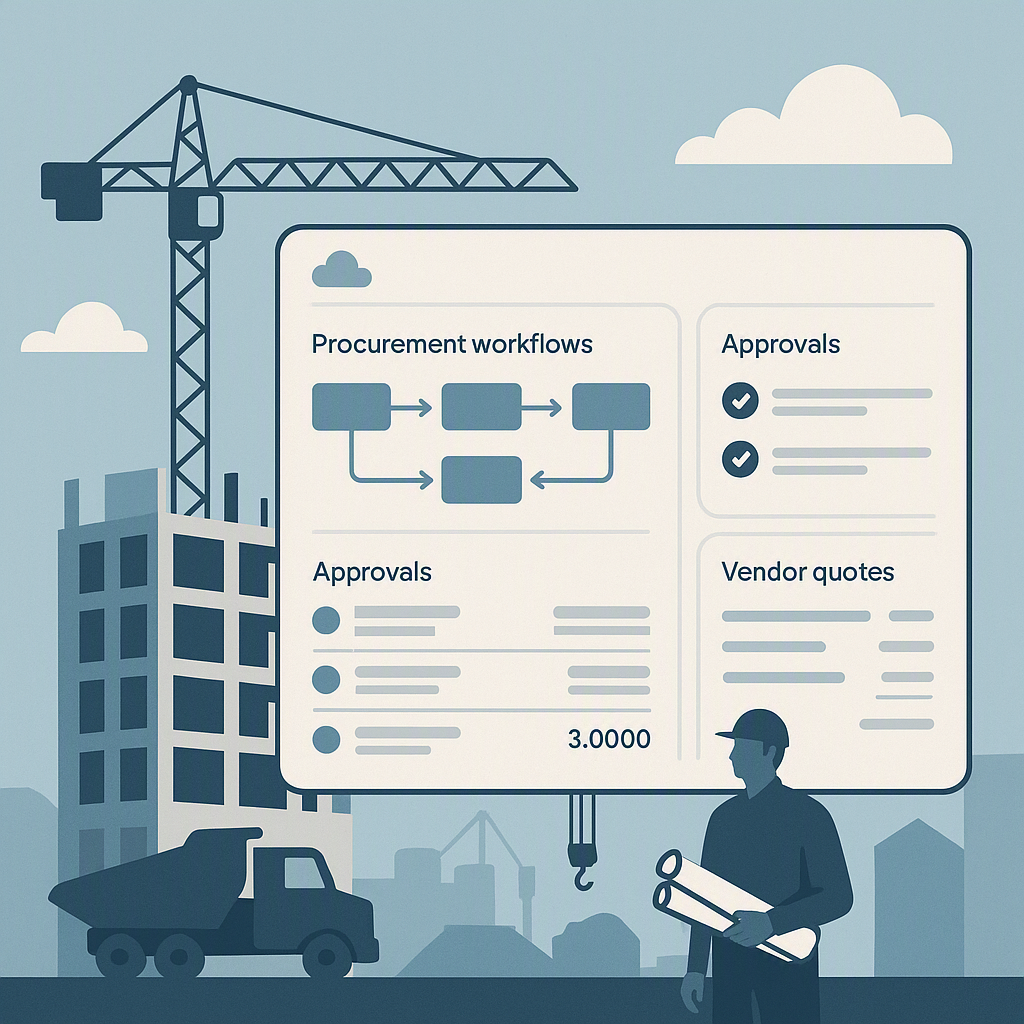
4. Multi-Level Approval Workflows
For approvals, multi-level workflows ensure requests don’t pile up. If a site manager is unavailable, the system escalates approvals to the next level automatically. This eliminates bottlenecks and keeps processes moving.
How to Implement This:
- Define escalation rules within your HR system. For example, if a site manager doesn’t approve an overtime request within 24 hours, it’s automatically forwarded to the regional manager.
- Monitor approval timelines to identify and address recurring delays.
Comparison Table: Old vs. New Approach
| Feature/Challenge | Old Approach | New Approach |
|---|---|---|
| Attendance Tracking | Centralized but generic | Job-wise with project integration |
| Error Handling | Manual corrections post-payroll | Pre-finalization validation checks |
| Attendance Logging | Biometric systems only | Mobile apps with geo-location |
| Approval Workflows | Single-level, manual follow-ups | Multi-level with auto-escalations |
| Cost Allocation | Lumped into generic accounts | Project-specific cost mapping |
What It Cost Us
Looking back, sticking to the old belief cost us credibility. We pitched solutions that didn’t fully address the pain points of multi-site enterprises. Clients were frustrated when the chaos didn’t go away, and it reflected poorly on us.
We also lost time—years, honestly—before we realized structured workflows matter more than shiny features.
There’s one thing I’m still not sure about: how much customization is too much? Some enterprises want rigid processes; others need flexibility. Finding the right balance is tricky, and we’re still experimenting.
The Bottom Line
If you're dealing with multi-site HR chaos, structured workflows—not just automation—make all the difference. Platforms like JobNext offer practical solutions, from job-wise attendance tracking to mobile apps that streamline approvals.
Learn more at JobNext.ai - Construction ERP