What We Used to Think
For years, many businesses relied on spreadsheets for tracking project costs. They’re flexible, familiar, and inexpensive. Everyone in the office knows how to use them. If you needed to know how much money was spent on a project, you’d pull up a spreadsheet, run some calculations, and—voila—you’d have your numbers. It seemed simple. It seemed reliable.
But spreadsheets have a significant limitation: they only show you what’s happened, not what’s happening. By the time you’ve updated your numbers, your project costs may have already spiraled out of control. This reactive nature can lead to missed opportunities to address issues early.
The Shift to Real-Time Cost Tracking
Real-time cost tracking has become a necessity for businesses managing complex projects. Enterprise software solutions provide tools to enforce budget discipline across the board. Every material purchase, subcontractor payment, and equipment hire can be validated against approved budgets. If something goes over, the system flags it immediately, allowing businesses to address issues proactively.
Illustrative example — A structured workflow might tie measurement registers to subcontractor payments. If unauthorized changes to a bill of quantities (BOQ) occur, the system can flag them before payments are processed, helping avoid potential cost overruns.
Why Spreadsheets Are Still Used
Spreadsheets remain popular because they’re easy to use and highly customizable. You don’t need specialized training, expensive software, or IT support to use them. Need a new column for a vendor’s price? Add it. Want to calculate margins manually? Go ahead.
However, this flexibility comes with risks. When managing multiple projects, relying on manual updates can lead to errors. Mistakes like forgetting to update a formula or copying values into the wrong cell can accumulate and go unnoticed until it’s too late. Spreadsheets are reactive, not proactive.
Moreover, spreadsheets cannot enforce workflows. They don’t ensure every material requisition goes through the right approval chain, lock BOQs to prevent unauthorized changes, or alert you when margins start to erode.
How Enterprise Software Solutions Transform Businesses
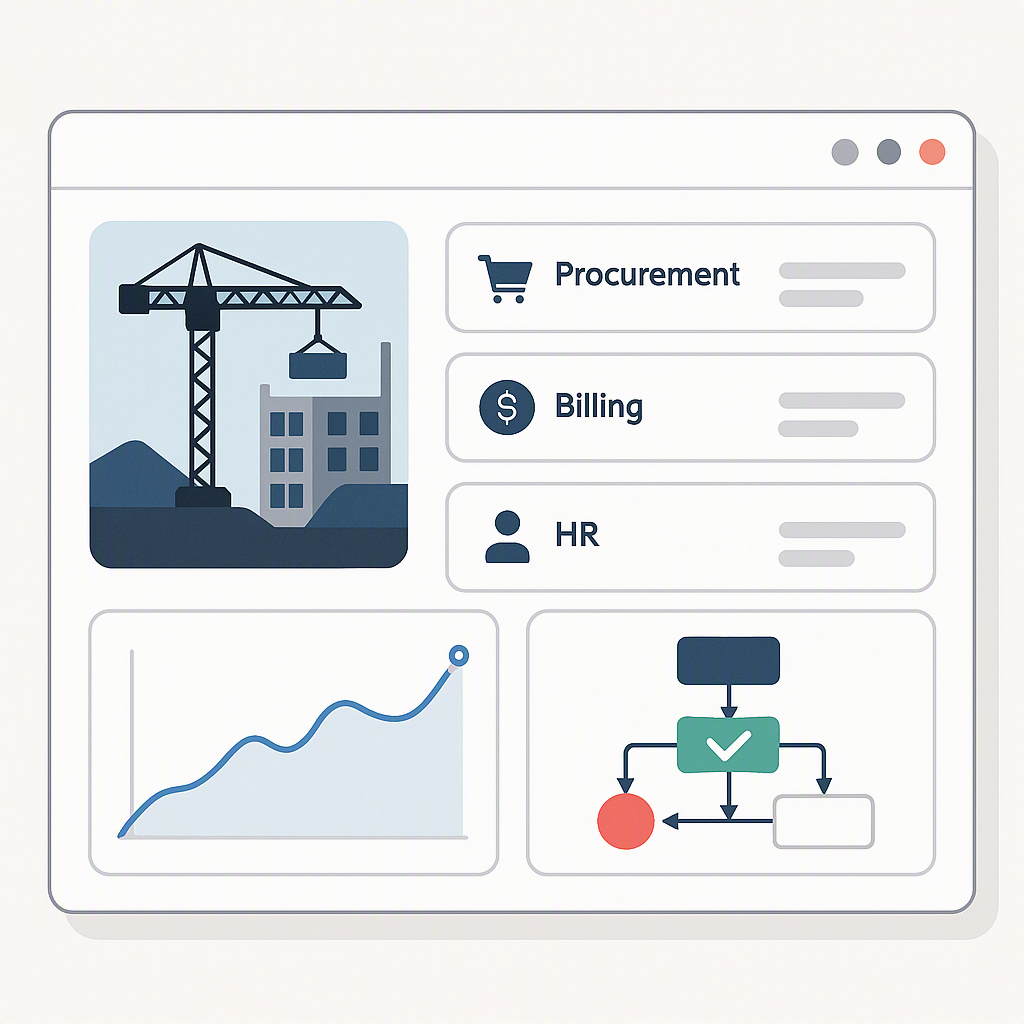
Modern enterprise software solutions integrate various aspects of project management, such as budgets, procurement, billing, and subcontractor workflows. These platforms provide real-time visibility into costs and flag discrepancies instantly, enabling businesses to act before issues escalate.
Illustrative example — A project management platform might allow businesses to set up job hierarchies with BOQ and work breakdown structure (WBS) scopes, link budgets directly to procurement workflows, and monitor margins in real-time through dashboards. If a purchase order exceeds the allocated budget, the system can flag it immediately, reducing the risk of cost overruns.
While spreadsheets can still be used as backups or for quick references, they are no longer the backbone of cost tracking systems in businesses that have adopted enterprise software solutions.
Enterprise software solutions offer businesses the tools they need to streamline workflows, enforce budget discipline, and reduce errors. By transitioning from reactive methods like spreadsheets to proactive systems, organizations can better manage costs and enhance overall efficiency.
Learn more at JobNext.ai - Construction ERP