The Silent Profit Killer in Construction Projects
Revenue leakage is a problem that sneaks up on you. It doesn’t announce itself like a busted budget or a delayed milestone. Instead, it quietly chips away at your margins, leaving you scratching your head at the end of the quarter, wondering where it all went.
If you’re in construction, you’ve seen it happen. A project finishes, but the final billing doesn’t match the work you actually completed. Maybe you missed invoicing some scope items. Maybe you over-billed the client, leading to disputes and delayed payments. Either way, you lose.
Why Does Revenue Leakage Happen?
Let’s start with the basics. Construction billing is complex. It’s not like selling a product where you set a price and collect payment. In construction, billing depends on the contract type and how work is tracked. You could have:
- Running account (RA) bills: Payments made progressively based on work completed.
- Stage-wise billing: Payments tied to specific milestones.
- Monthly billing: Payments based on recurring measurements.
- Supply BOQ-based billing: Billing for materials or equipment based on the bill of quantity.
- Combined project billing: Consolidated billing for multiple scopes or projects.
- One-time invoices: Payments requested after final project completion.
Each billing method requires a unique workflow. But here’s the kicker: complexity breeds chaos. Without a structured system, it’s easy to miss items, miscalculate recurring bills, or lose track of work certified for payment. That’s where revenue leakage starts.
Key Contributors to Revenue Leakage
- Manual Errors: Miscalculations in scope measurement or billing quantities.
- Unapproved Scope Changes: Unauthorized changes or additions to the project scope.
- Delayed Billing Cycles: Missed timelines for invoicing or approvals.
- Disputes Over Measurements: Lack of a consistent audit trail for scope and progress tracking.
The Enterprise Software Solution
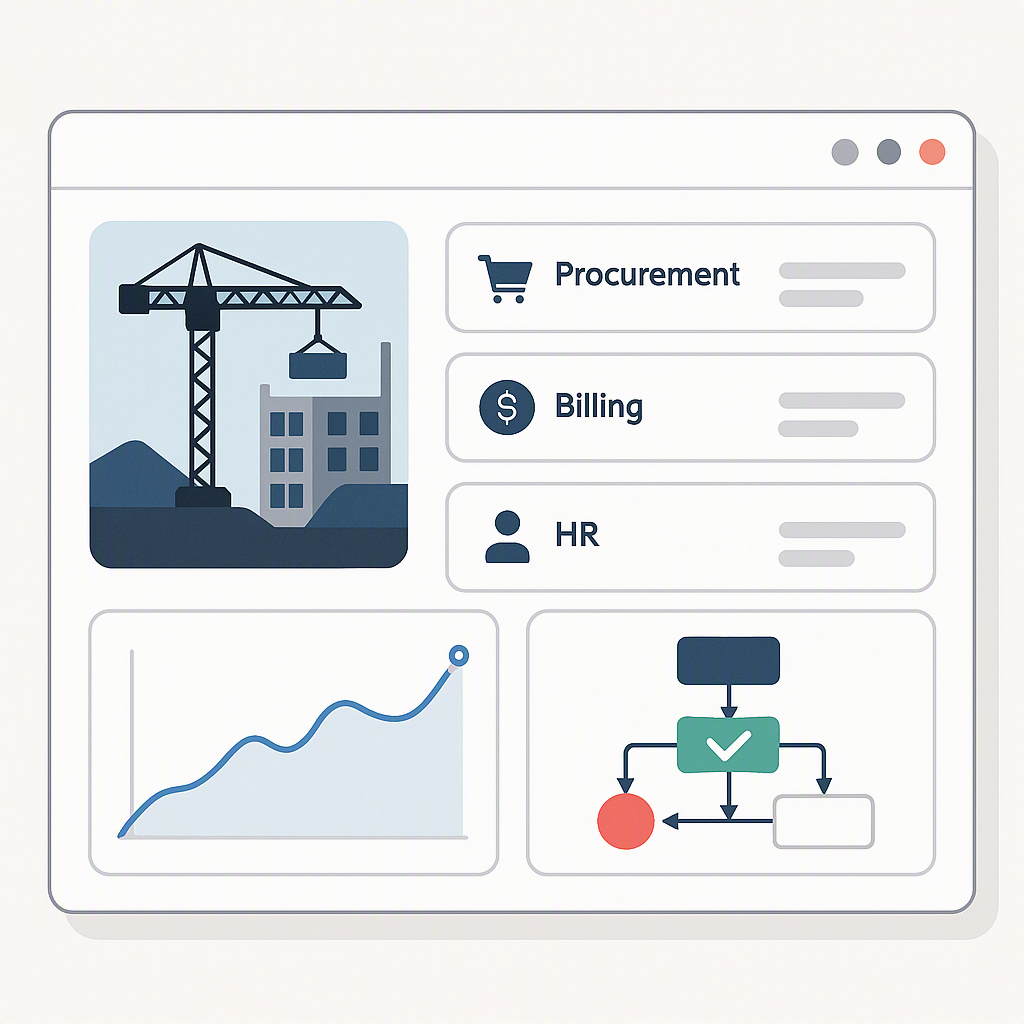
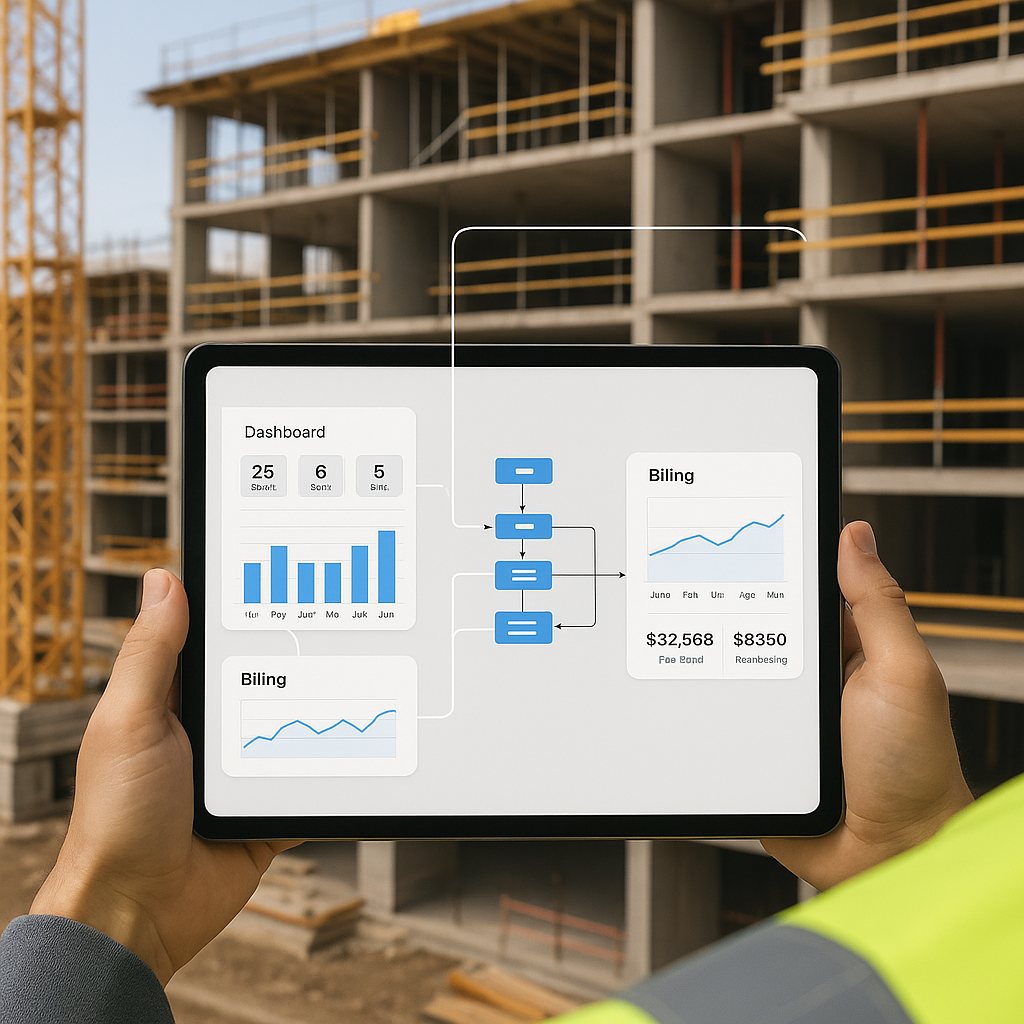
This is where enterprise software steps in. Take JobNext, for example—a multi-tenant SaaS ERP purpose-built for construction contractors. One of its standout features is its ability to handle six distinct billing methods. Why does that matter? Because it ensures that every piece of completed work is tied to a structured measurement-to-invoice chain.
How Does JobNext Work?
Let’s say you’re working on a ₹50 crore residential project and using RA bills. Without a system to track progress and measurements, anything from a small extra scope item to a delayed approval can derail your billing cycle. JobNext locks the bill of quantity (BOQ) and ensures every measurement is auditable and tied to the approved scope. This prevents unauthorized changes and over-billing disputes.
But it doesn’t stop there. JobNext consolidates customer invoices across multiple projects, saving you from the headache of juggling separate bills. Whether you’re billing for a one-time supply or a multi-stage project, the software ensures accuracy.
Benefits of Structured Billing With JobNext
| Problem | Traditional Approach | JobNext Solution |
|---|---|---|
| Missed scope items | Manual tracking prone to errors | Audit trail tied to BOQ |
| Over-billing disputes | No standardized workflows | Locked BOQ prevents disputes |
| Multiple project invoices | Separate systems for each project | Consolidated dashboard for invoices |
| Manual recurring billing | High risk of miscalculations | Automated measurement workflows |
Learn more about JobNext’s structured billing workflows here →.
Real-Time Alerts for Margin Control
You might think, "Okay, structured billing sounds great, but what about catching errors before they become revenue leaks?" Good question. Enterprise software doesn’t just help you bill accurately; it helps you monitor profitability in real time.
JobNext, for instance, tracks costs against budgets at the BOQ, scope, and estimate levels. When there’s a deviation—say, an over-budget purchase order or subcontractor payment—it sends alerts to the relevant managers. This kind of visibility means you can catch issues before they spiral out of control.
Key Features of Real-Time Alerts
- Deviation Notifications: Alerts for costs exceeding budget forecasts.
- Subcontractor Oversight: Automated tracking of subcontractor payments and scope progress.
- Material Cost Tracking: Notification of unexpected price hikes or over-purchases.
Common Mistakes Contractors Make
Even with the best tools, mistakes happen. Here are the top three billing errors contractors make:
- Skipping the approval chain: Without multi-level approvals, it’s easy for unauthorized expenses to slip through. JobNext enforces strict workflows to prevent this.
- Ignoring contract-specific billing methods: Not every project can be billed the same way. JobNext’s flexibility with six billing methods ensures you can match the workflow to the contract.
- Manual calculations in recurring billing: For monthly service contracts, manual measurement generation is a disaster waiting to happen. Automate it.
Actionable Steps to Avoid These Mistakes
- Enforce Approval Workflows: Use software to lock down unauthorized changes or expenses.
- Match Billing to Contract Type: Analyze the contract before starting and set up workflows accordingly.
- Automate Recurring Measurements: Invest in tools that eliminate manual errors in repetitive tasks.
Final Thoughts
Revenue leakage isn’t just a financial problem; it’s a workflow problem. If your billing process is chaotic, you’re leaving money on the table. Enterprise software solutions like JobNext fix this by enforcing structure, automating workflows, and providing real-time visibility.
If you’re tired of losing margins to billing chaos, JobNext can help. Get started today →
Learn more at JobNext.ai - Construction ERP