HR Management at Construction Sites: The Challenge
If you’ve ever tried to manage HR for a construction company with multiple sites, you know the chaos. Attendance logs get lost. Payroll gets messy. Staff allocation becomes a guessing game. And compliance issues can lead to significant penalties and operational disruptions.
For years, many managers relied on basic spreadsheets, assuming that training site supervisors and admin staff well enough would ensure accurate tracking of attendance, payroll, and compliance. However, these manual systems often fail to meet the demands of multi-site operations.
The Problem That Highlights the Need for Better Systems
Managing HR across multiple sites introduces unique challenges. Each site may have its own team, HR admin, and attendance tracking methods. This decentralization can lead to incomplete or delayed data, which in turn disrupts payroll and compliance processes. For example, missing attendance records can delay salary payments, causing dissatisfaction among workers and operational setbacks.
These challenges underscore the need for systems that are robust, centralized, and capable of handling the complexities of multi-site HR management.
Why Decentralized Data is a Problem
Decentralized data means that critical HR information is scattered across various locations, whether in paper files, spreadsheets, or emails. This significantly increases the likelihood of errors and delays. For example:
- Attendance records might not be submitted on time, resulting in delayed payroll.
- Different sites could use inconsistent methods to track hours worked, leading to discrepancies.
- Compliance requirements, such as statutory filings, could be overlooked if documentation isn’t centralized.
Example of Operational Disruption
Consider a construction project where deadlines are tight, and workers expect timely payments. If attendance logs from one site are delayed, the entire payroll process for hundreds of workers could be thrown off schedule. This doesn’t just cause friction among employees but can also result in delays to project timelines as workers become demotivated or even go on strike.
Specific Challenges Faced by Multi-Site Construction Companies
To dive deeper into the hurdles faced by HR managers in construction businesses, here are some common scenarios:
- Inconsistent Attendance Logs: Paper-based attendance systems are prone to errors. Workers forget to sign in, logs get misplaced, or supervisors fail to submit them on time. Even digital attendance systems that aren’t integrated across sites can result in siloed and incomplete data.
- Limited Coordination Between Sites: If multiple teams are working on different projects, it becomes hard to ensure workforce allocation aligns with project demands. For example, one site may experience labor shortages while another has workers sitting idle due to lack of communication.
- Delayed Payroll Processing: Without accurate attendance records, payroll calculations are delayed, leading to frustration among employees. This also affects the reputation of the company and its ability to retain skilled workers.
- Compliance Penalties: Construction companies operate in highly regulated environments. Missteps in statutory compliance—like failing to submit PF (Provident Fund) or ESI (Employee State Insurance) contributions—can result in hefty penalties and damage to reputation.
- Resource Wastage: When HR data isn't centralized, companies risk overstaffing or underutilizing workers across sites, leading to inefficiencies and higher labor costs.
A 2023 McKinsey report highlights that a significant portion of construction companies face HR and payroll issues due to poor data management. This demonstrates how widespread these challenges are in the industry.
Why Traditional HR Systems Struggle
Traditional HR tools, like spreadsheets or standalone software, often fall short in several ways, especially when managing employees across multiple sites:
- Disorganized Attendance Tracking: Paper-based methods are outdated. Site supervisors may forget to submit records, or documents may get lost, causing errors and delays.
- No Real-Time Visibility: Managers often don’t know who is on-site or how many workers are available until problems arise. This lack of visibility can lead to overstaffing, understaffing, or project delays.
- Complex Payroll Management: Payroll calculations become a nightmare when data is incomplete, inconsistent, or spread across multiple systems. Manual interventions increase the likelihood of errors.
- Increased Compliance Risks: Handling statutory deductions like PF, ESI, and TDS manually increases the likelihood of errors, especially when multiple sites are involved.
A Painful Process of Manual Systems
To illustrate the scale of the problem, imagine a scenario where a construction company with five sites needs to process payroll for 200 workers. Attendance logs have to be collected from each site, manually entered into spreadsheets, cross-referenced for errors, and then approved. A single missing entry can derail the entire payroll process, delaying salaries for hundreds of workers and creating dissatisfaction among employees.
How Cloud-Based HR Tools Address These Challenges
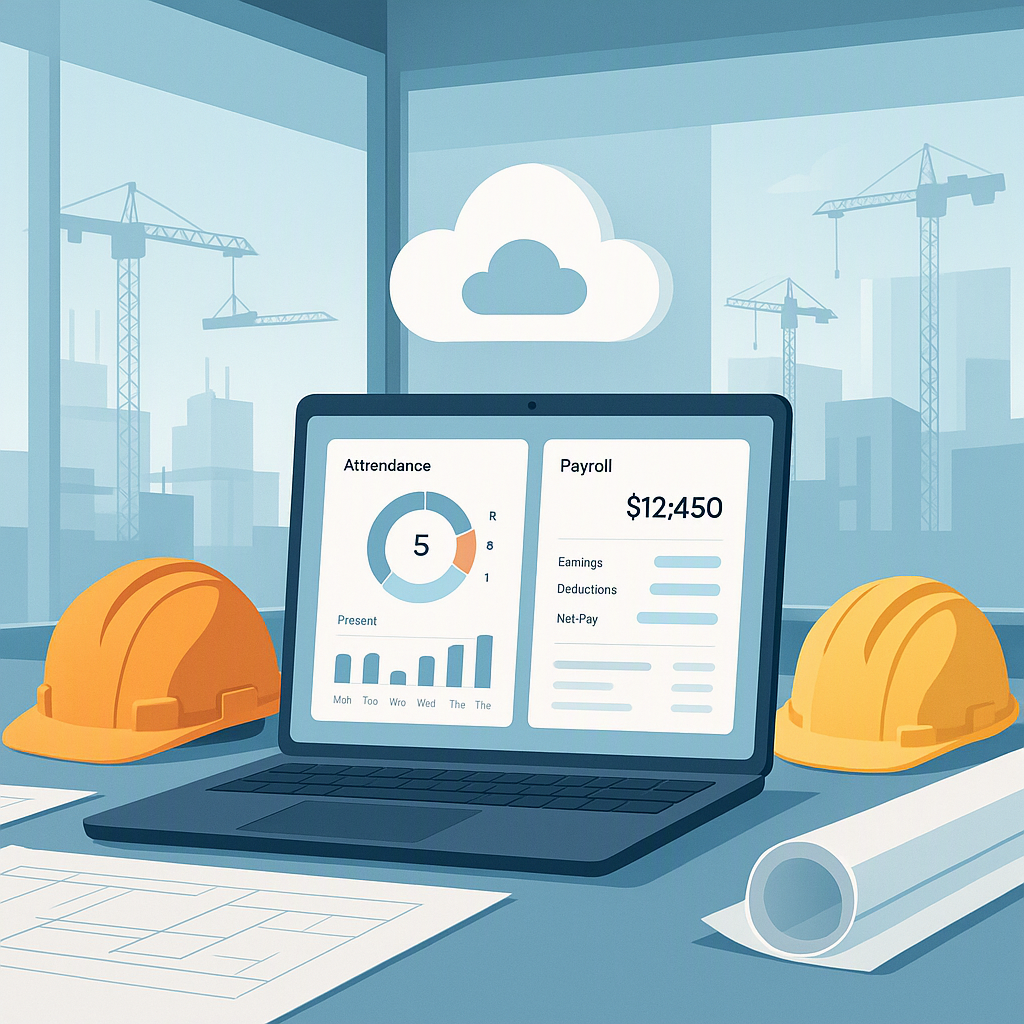
Cloud-based HR management systems offer solutions to the common problems faced in multi-site operations. These tools centralize data, automate processes, and provide real-time visibility, making HR management more efficient and reliable.
Key Features of Cloud-Based HR Tools
Here are some of the features that make cloud-based HR tools effective for multi-site operations:
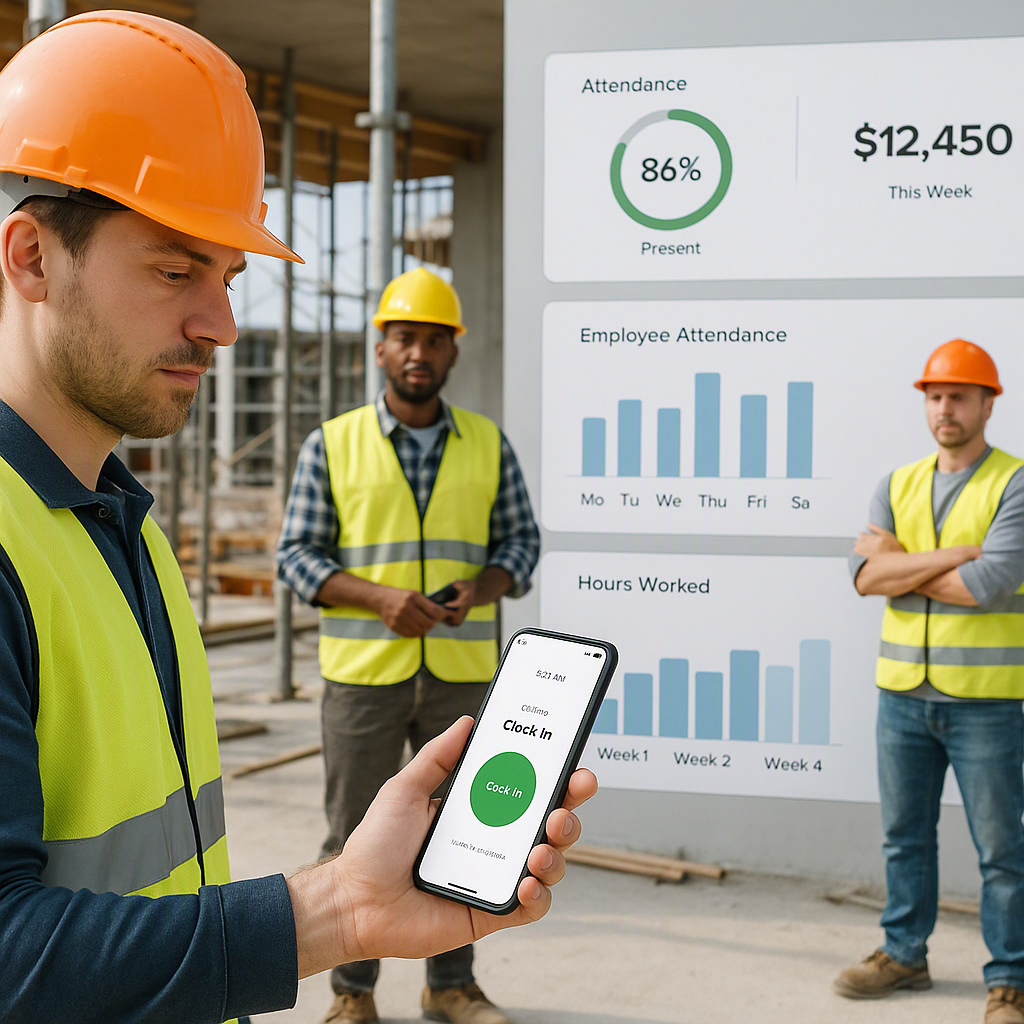
- Attendance Integration: Site supervisors can upload attendance directly into the system, or workers can use mobile apps to clock in and out. GPS tracking ensures that workers are signing in at the correct location.
- Centralized Payroll: Once attendance is finalized, payroll calculations—including allowances and deductions—can be automated using algorithms. This ensures timely and accurate salary payments.
- Statutory Compliance Automation: Cloud-based systems can automatically calculate and track statutory deductions, saving HR staff hours of manual work and reducing compliance risks.
- Real-Time Dashboards: Managers can access dashboards to monitor workforce allocation, attendance, and payroll status across all sites. This helps identify potential bottlenecks and improve decision-making.
- Mobile Accessibility: Workers and site managers can access the system from their phones, making it easier to report issues or update attendance records on the go.
Actionable Steps to Implement Cloud-Based HR Management
If your construction business is ready to move to cloud-based HR management, follow these steps:
- Assess Current Challenges: Analyze your current HR processes to identify bottlenecks. Are attendance logs often incomplete? Are payroll calculations delayed? Understanding your pain points will help you choose the right system.
- Evaluate Tools: Research cloud-based HR tools that suit your company size and regional compliance needs. Popular tools include BambooHR, Zoho People, and SAP SuccessFactors.
- Pilot Implementation: Start with a single site to test the tool. Train supervisors and HR staff, monitor the process, and gather feedback.
- Standardize Processes: Create consistent guidelines for attendance tracking, payroll submission, and compliance reporting across all sites.
- Monitor Adoption: Use the system’s dashboards to track data submission and identify sites that may need additional training or support.
Comparison of Traditional vs Cloud-Based HR Tools
| Feature | Traditional HR Tools (Spreadsheets) | Cloud-Based HR Tools |
|---|---|---|
| Data Accuracy | Prone to errors; manual entry | Automated calculations |
| Real-Time Updates | Not available | Available via dashboards |
| Compliance Management | Manual and prone to mistakes | Automated and reliable |
| Scalability | Limited | Easily scalable |
| Accessibility | Requires physical access to files | Accessible via mobile apps |
Overcoming Resistance to Change
Many managers hesitate to adopt cloud-based HR tools, often because they are accustomed to traditional methods like spreadsheets. These tools are familiar, inexpensive, and seem "good enough" for smaller operations. However, as operations scale, the limitations of manual systems become apparent:
- Spreadsheets lack real-time visibility.
- They require manual data entry, increasing the risk of errors.
- They don’t offer automation for payroll or compliance.
Investing in cloud-based HR tools may seem like an additional expense, but the long-term benefits—such as reduced compliance risks, fewer payroll errors, and improved operational efficiency—far outweigh the initial costs.
If you're struggling with multi-site HR management, cloud-based HR tools can help you streamline operations, reduce errors, and improve compliance. Explore solutions tailored to your industry to find the best fit for your needs.
Learn more at JobNext.ai - Construction ERP