Why Spreadsheets May Not Be Enough for HR Management
Back when contractors managed multi-site operations using spreadsheets, emails, and a patchwork of local payroll systems, it seemed manageable. However, this approach often led to delays, errors, and compliance headaches. While spreadsheets are cheap and familiar, they lack the integration and automation needed for complex HR tasks. This can result in missed compliance deadlines, payroll errors, and inefficiencies that cost both time and money.
In today’s fast-paced, highly regulated business environment, relying solely on spreadsheets for HR management is akin to using a flip phone in the age of smartphones — sure, it works, but it’s far from efficient and often prone to breakdowns when things get complicated. Let’s dive deeper into why this is the case and explore better alternatives.
The Challenges of Multi-Site HR Management
Managing HR across multiple sites introduces unique challenges. Different locations may have varying payroll rules, compliance requirements, and attendance tracking systems. These challenges are amplified when you’re using manual methods like spreadsheets or juggling multiple disconnected tools. Let’s break down the key issues:
1. Disparate Compliance Requirements
Countries, states, and even local jurisdictions have specific labor laws and compliance requirements. For instance, in India, statutory deductions like Provident Fund (PF) or Employee State Insurance (ESI) must be calculated and filed according to strict timelines. Similarly, GCC countries have VAT regulations that require accurate reporting. Tracking these obligations manually leads to:
- Missed deadlines and potential penalties.
- Errors in calculations due to changing laws.
- Confusion when managing compliance across multiple geographies.
2. Inefficient Attendance Tracking
Attendance tracking is another pain point. Site-specific requirements and diverse employee roles (e.g., contractors, part-time employees, full-time staff) often demand customized attendance systems. Tracking attendance manually via spreadsheets leads to:
- Inconsistent and inaccurate data.
- Increased disputes over attendance and overtime hours.
- Time-consuming reconciliation processes that delay payroll processing.
3. Payroll Complexities
Payroll processing for multi-site operations is rarely straightforward. Different sites may have unique wage structures, allowances, overtime rates, and local tax regulations. Without automation, payroll teams must spend countless hours ensuring accuracy. The risks include:
- Manual errors in calculations.
- Delayed salary disbursements.
- Lack of transparency, leading to employee dissatisfaction.
Why Cloud-Based HR Systems Are a Game-Changer
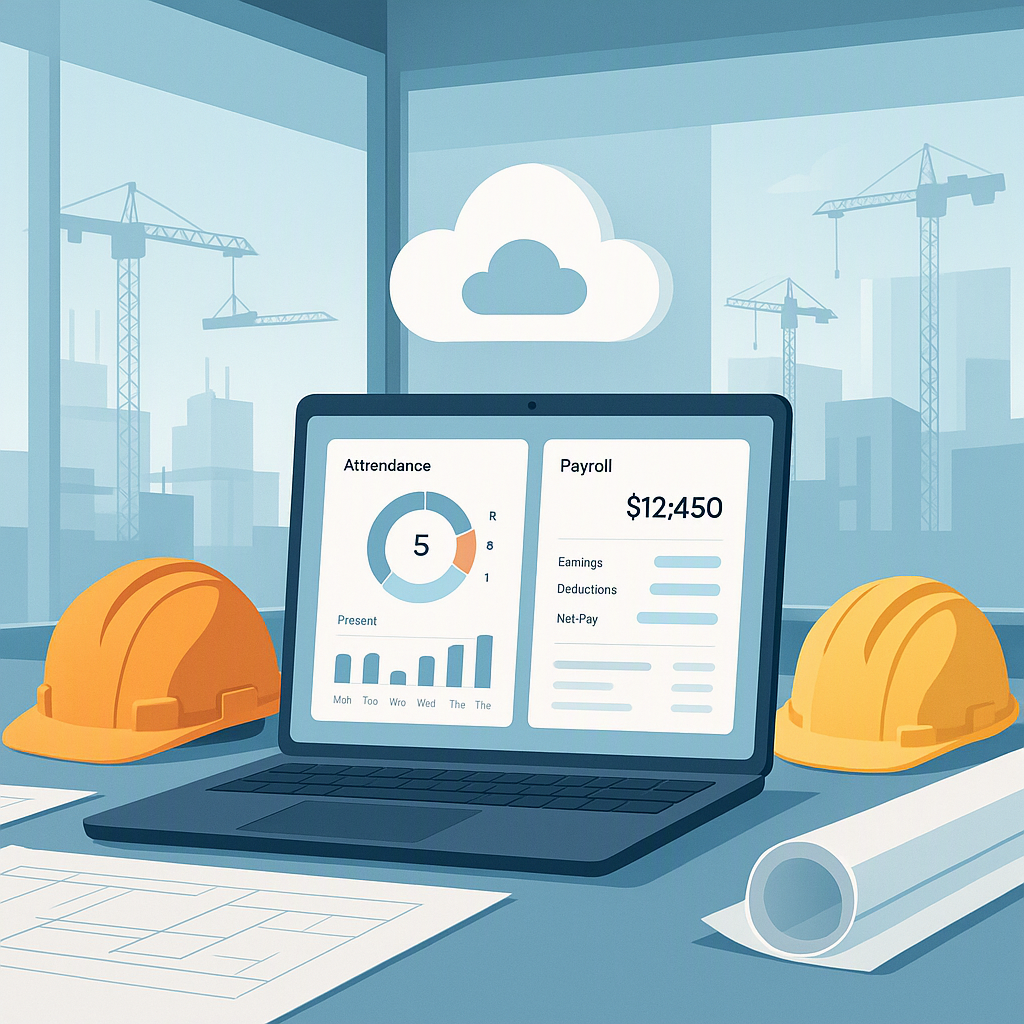
Cloud-based HR systems offer solutions to many of these challenges by centralizing data, automating processes, and ensuring real-time access to information. Let’s delve deeper into how they address each pain point.
1. Centralized Employee Data
Cloud systems allow you to store all employee information — such as personal details, salary structures, visa statuses, attendance, and leave history — in one secure, easily accessible database. Here’s why this matters:
- Reduced Errors: With all data in one place, there’s no risk of discrepancies caused by managing multiple versions of a file.
- Improved Collaboration: HR teams across different sites can access and update the same data in real-time.
- Faster Decision-Making: Managers can quickly pull reports and get an accurate picture of workforce metrics.
2. Automated Compliance Tracking
Compliance management becomes significantly easier with cloud-based systems. They provide:
- Automated Alerts: Notifications for upcoming deadlines like visa renewals or tax filings ensure nothing falls through the cracks.
- Built-In Legal Updates: Many platforms automatically update tax and labor law changes, reducing the burden on HR teams to stay informed.
- Audit Trails: Systems maintain logs of compliance actions, making audits smoother and more transparent.
3. Attendance Integration
Cloud-based systems integrate with various attendance tracking tools, such as biometric devices and mobile apps. The benefits include:
- Real-Time Syncing: Instant updates ensure you’re always working with the most accurate data.
- Elimination of Manual Work: No more manual uploads or corrections.
- Enhanced Reporting: Generate detailed reports on attendance trends, reducing the chances of disputes.
4. Simplified Payroll Processing
Payroll processing becomes more efficient and accurate with cloud-based HR systems:
- Customizable Settings: Tailor the system to handle varying allowances, taxes, and overtime rates across different sites.
- Automated Attendance Reconciliation: Integrate attendance data directly into payroll calculations, ensuring precision.
- Faster Processing: Generate payroll in a fraction of the time it would take manually.
5. Employee Self-Service Portals
Self-service portals empower employees to manage their own information. Key features include:
- Access to Payslips: Employees can download their payslips instantly, reducing HR inquiries.
- Leave Management: Workers can apply for leave and check their leave balance without contacting HR.
- Transparency: Clear visibility into attendance and payroll records builds trust.
Comparison Table: Spreadsheets vs. Cloud-Based HR Systems
| Feature | Spreadsheets | Cloud-Based HR Systems |
|---|---|---|
| Data Centralization | Disjointed across files. | Centralized and unified. |
| Compliance Management | Manual and error-prone. | Automated alerts and updates. |
| Attendance Tracking | Manual entry and prone to errors. | Automatic and real-time integration. |
| Payroll Processing | Labor-intensive and slow. | Automated with customizable rules. |
| Employee Self-Service | Not available. | Comprehensive self-service portals. |
| Scalability | Difficult to scale. | Easily scalable as your business grows. |
| Data Security | Minimal protections. | Advanced encryption and controls. |
Making the Transition
For contractors managing multi-site operations, transitioning to a cloud-based HR system can be transformative. While the upfront investment may seem significant, the long-term benefits — from improved efficiency to reduced errors and enhanced compliance — make it a worthwhile decision.
Here’s how to start:
-
Evaluate Your Current Processes
- Identify inefficiencies in your current HR processes.
- Map out specific pain points such as errors, delays, or compliance risks.
-
Research Vendors
- Look for platforms with strong reviews and a history of working with businesses similar to yours.
- Evaluate their feature set: Does it include attendance integration, compliance tracking, and payroll customization?
-
Request Demos
- Schedule product demos to see how the system works in real-world scenarios.
- Involve your HR team in the demo to gather their feedback.
-
Plan Implementation Carefully
- Work closely with the vendor on data migration, system configuration, and training.
- Roll out the system in phases to allow teams to adapt.
-
Monitor and Optimize
- Track the system’s performance over time and gather feedback from users.
- Work with your vendor to implement updates and improvements as needed.
By adopting a cloud-based HR system, you can streamline operations, improve compliance, and focus your HR team on strategic initiatives that drive growth. It’s a forward-thinking step that equips your organization to handle the complexities of multi-site HR management efficiently and effectively.
Learn more at JobNext.ai - Construction ERP