Understanding Enterprise Software Solutions
Enterprise software solutions are specialized tools designed to manage and optimize complex business processes. These systems are tailored to meet the needs of organizations that handle large-scale operations, multiple departments, and intricate workflows. By automating and structuring processes, enterprise software can significantly enhance efficiency, reduce errors, and improve overall business performance.
Challenges of Manual Procurement Workflows
Many businesses, especially small and mid-sized ones, still rely on manual methods like spreadsheets, emails, and phone calls to manage procurement. While these methods may seem sufficient, they often lead to inefficiencies and errors. Here are some common challenges:
-
Duplicate Orders: Manual systems can result in placing the same order multiple times, leading to unnecessary costs and logistical confusion.
-
Missed Approvals: Approval processes can become delayed or skipped entirely when managed through emails or verbal communication, increasing the risk of unauthorized purchases.
-
Vendor Management Issues: Handling vendor quotes manually can be chaotic, with offers arriving in various formats, making it difficult to compare and evaluate them effectively.
-
Lack of Real-Time Tracking: Without a centralized system, tracking the status of procurement activities becomes cumbersome, leading to delays and miscommunication.
How Enterprise Software Transforms Procurement
Enterprise software addresses these challenges by introducing automation and structure to procurement workflows. Here’s how it works:
-
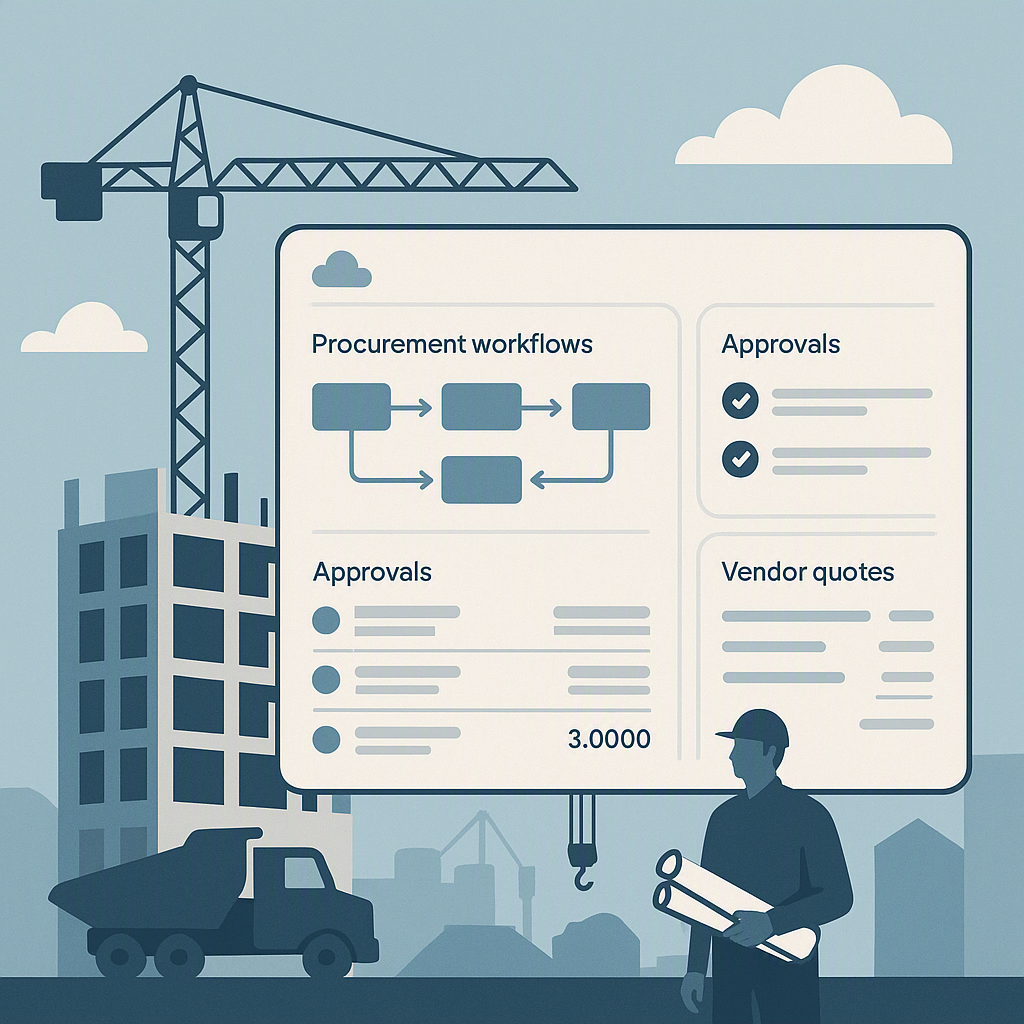
Structured Workflows: The procurement process, from material requests to purchase orders, is clearly defined and tracked. This ensures that every step is accounted for and reduces the likelihood of errors.
-
Approval Chains: Multi-level approval workflows can be customized to match organizational policies. For instance, small purchases can be approved by site managers, while larger expenditures require higher-level authorization.
-
Vendor Integration: Vendors can submit their offers directly into the system through a standardized portal, simplifying the comparison process and reducing manual data entry errors.
-
Real-Time Status Updates: A centralized dashboard provides a live view of procurement activities, allowing businesses to track approvals, deliveries, and reconciliations without delays.
Benefits of Enterprise Software Solutions
By adopting enterprise software, businesses can experience several benefits:
-
Error Reduction: Automation minimizes the risk of human errors, such as duplicate orders or missed approvals.
-
Increased Efficiency: Streamlined workflows save time and allow teams to focus on strategic tasks rather than administrative ones.
-
Improved Transparency: A clear audit trail ensures accountability and simplifies compliance with internal and external regulations.
-
Cost Savings: By reducing errors and inefficiencies, businesses can save money and improve their bottom line.
Overcoming Challenges in Adoption
While enterprise software offers significant benefits, transitioning from manual systems can be challenging. Common hurdles include:
-
Change Management: Teams accustomed to manual processes may resist adopting new tools. Providing training and demonstrating the benefits can help ease the transition.
-
Balancing Automation and Flexibility: While automation is beneficial, businesses must ensure that their systems allow for necessary exceptions without compromising overall efficiency.
FAQ
1. What kind of businesses benefit most from enterprise software solutions?
Businesses managing complex operations, multiple projects, or extensive supply chains, such as those in construction, manufacturing, or logistics, can benefit significantly from enterprise software.
2. Is enterprise software expensive?
While the initial investment may seem high, the long-term savings from reduced errors and improved efficiency often justify the cost. Many businesses see a return on investment within a few months.
3. What challenges should I expect when implementing enterprise software?
The primary challenge is change management. Ensuring that all team members are trained and comfortable with the new system is crucial for a successful transition.
4. Can small businesses benefit from enterprise software?
Yes, small businesses can benefit greatly, as they often have limited resources to manage inefficiencies. Enterprise software can help them streamline operations and compete more effectively.
5. Are there trial options available?
Many enterprise software providers offer demos or trial periods, allowing businesses to evaluate the system before making a commitment.
Enterprise software solutions are a powerful tool for transforming business operations. By automating and structuring workflows, they help organizations reduce errors, improve efficiency, and achieve better financial outcomes. If your business is struggling with manual processes, it may be time to explore how enterprise software can make a difference.
Learn more at JobNext.ai - Construction ERP