What We Thought About Cost Tracking
We used to think margin erosion was just bad math. If you track your costs carefully, you'll know your profitability. Right? That's what spreadsheets are for. You have your BOQs, your estimates, and your invoices. If you're disciplined enough, your numbers should add up.
But here's the problem. Numbers don't tell you where the holes are—they just tell you you're bleeding. And by the time you're looking at those numbers, it's too late. You've already lost the margin you were trying to protect.
What Changed Our Minds
Through experience, we realized that manual processes and disconnected tools often lead to errors and inefficiencies. Over-orders, missed RFQs, approvals bypassed—it’s chaos without structured workflows. Automated systems can help by flagging potential issues, such as subcontractor over-measurements or material requests exceeding BOQs, before they escalate into costly problems.
Why We Thought Spreadsheets Were Good Enough
Spreadsheets have inertia. They're simple, they're cheap, and they're familiar. You can design your own tabs, formulas, and workflows. And hey, if you're a small operation, maybe that's enough. But for contractors running multiple concurrent projects across sites? It gets ugly fast.
Margins erode because spreadsheets can't enforce discipline. They can't stop a material request that exceeds the approved scope. They can't flag a subcontractor invoice that doesn't align with the measurement register. And they definitely can't track real-time profitability at the BOQ or scope level.
We clung to spreadsheets for too long. Honestly, they felt liberating at first. No rigid ERP rules to follow. But the very flexibility that made them appealing was also their downfall. They didn't catch errors. They didn't enforce workflows. And they didn't talk to each other—every project had its own silo.
What We Do Differently Now
Today, we rely on structured cost tracking workflows provided by enterprise software solutions. Every material purchase, subcontractor payment, and equipment hire is validated against approved budgets before moving forward. If something doesn’t match the BOQ or estimate, the system flags it. And if it’s serious enough, it stops the transaction entirely.
What’s key here isn’t just the software—it’s the integration. Enterprise software ties cost tracking to procurement, billing, and subcontractor management. For example, a material request (MR) flows through RFQs, vendor offers, and POs in one unified chain. This eliminates manual chaos and ensures budgets are respected every step of the way.
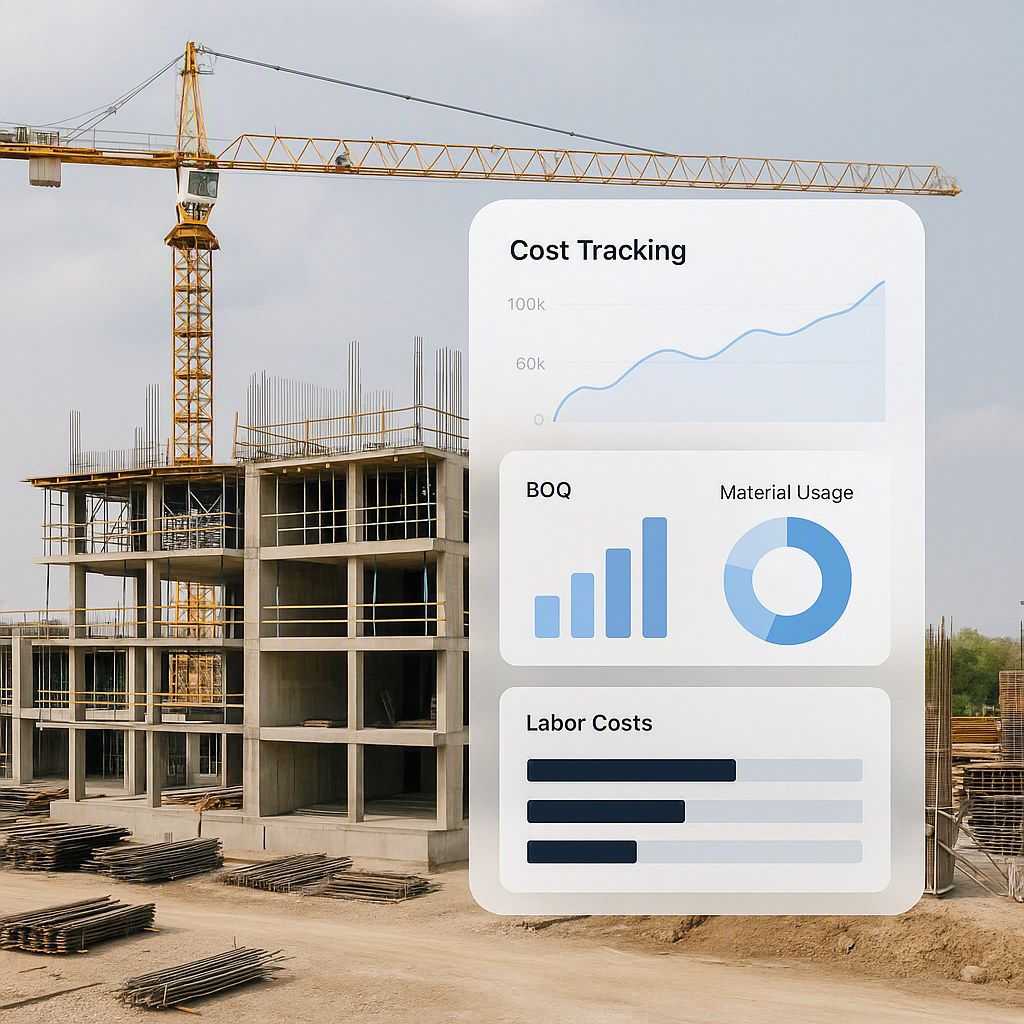
Real-time dashboards provide visibility into profitability—whether it's at the project, BOQ, or scope level. This transparency helps businesses make informed decisions and reduces the risk of errors.
What Being Wrong Cost Us
The most painful losses were the invisible ones. Untracked over-measurements, missed invoices, and unapproved payments—all adding up to silent margin erosion. While structured workflows and automation significantly reduce these risks, there’s still room for human oversight to ensure continuous improvement.
Frequently Asked Questions
Q: Why can’t spreadsheets enforce workflows? A: Spreadsheets don’t have built-in approval chains, alerts, or integration with other systems. They’re static tools, not dynamic workflows.
Q: Can enterprise software prevent all margin erosion? A: No system is perfect. But enterprise software’s real-time cost tracking significantly reduces the risk by enforcing budgets and flagging errors before they escalate.
Q: What happens if a transaction is blocked? A: Blocked transactions require manual review. This ensures questionable expenses don’t slip through without oversight.
Q: Is enterprise software only for large contractors? A: No, it’s designed for businesses of all sizes. Even smaller firms benefit from structured workflows and real-time profitability tracking.
If margin erosion is haunting your projects, enterprise software solutions can help. Learn more →
Learn more at JobNext.ai - Construction ERP