The Hidden Costs of Disconnected Systems
Every contractor knows margins are thin. But what many don’t realize is how much money gets lost—not to bad estimates or delayed payments—but to the chaos caused by disconnected systems. One team uses spreadsheets for procurement tracking. Another uses WhatsApp for subcontractor coordination. HR runs payroll on standalone software. Finance manages billing separately. The result? A fragmented mess where errors slip through the cracks, and no one sees the big picture.
Disconnected systems can lead to unbilled revenue, budget overruns, and inefficiencies. For example, a subcontractor’s work might be approved based on progress measurements, but if the finance team misses the billing step because it’s tracked separately, revenue is lost. Similarly, material procurement might exceed the budget if purchase orders aren’t cross-checked against resource estimates.
The solution? Enterprise software that ties everything together.
What Enterprise Software Actually Does
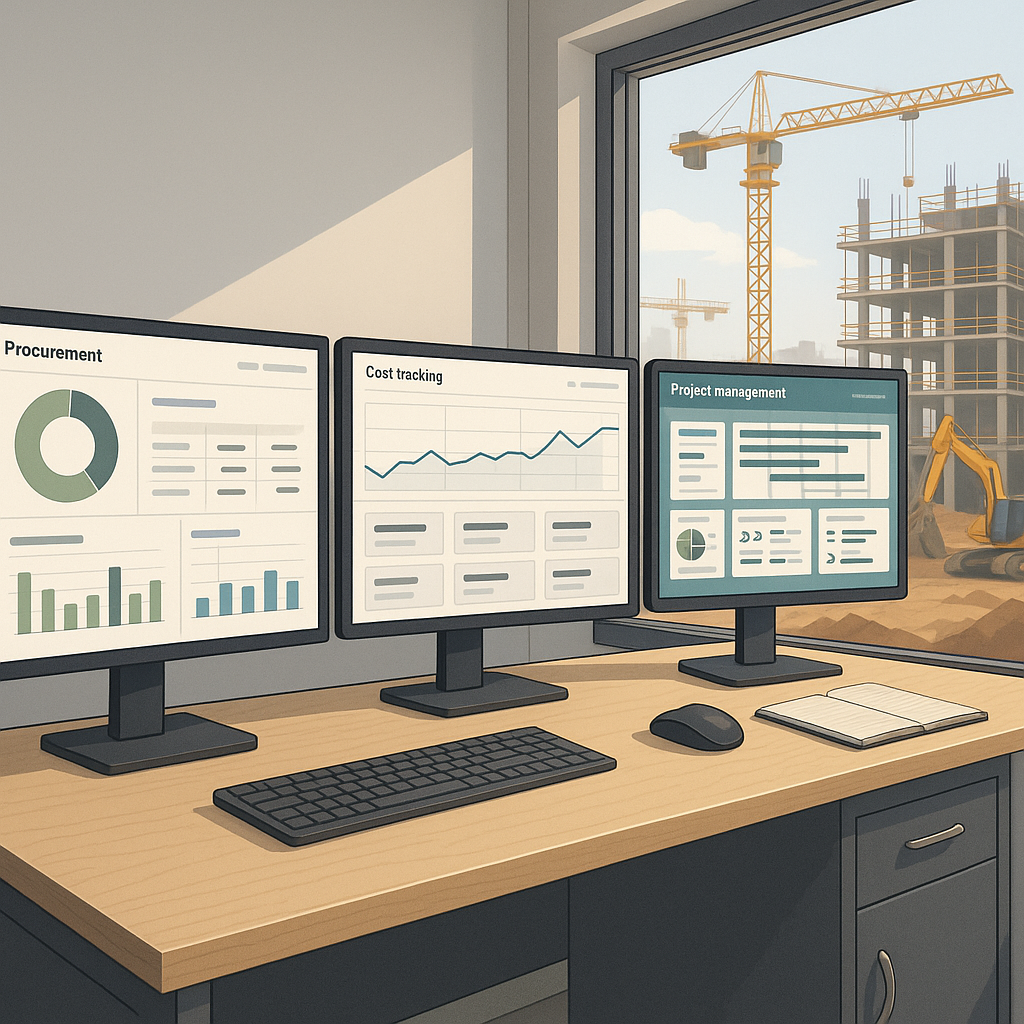
Enterprise software isn’t just about digitization. It’s about integration. Instead of six different tools for tendering, billing, procurement, HR, finance, and equipment, platforms unify operations on a single system. Every module communicates with the others. Material requisitions automatically link to budgets. Subcontractor measurements feed directly into billing. Payroll allocates staff costs to projects.
Let’s break down one practical example: procurement workflows. In disconnected setups, procurement is chaotic. Material requisitions (MRs) are emailed around, vendor quotes sit in inboxes, and purchase orders (POs) get lost in approvals. Enterprise software enforces a structured workflow: MR → RFQ → Vendor Offers → PO. Every step is validated against approved budgets, cutting waste and ensuring accountability.
Real-Time Profitability Tracking
Another game-changer is real-time project profitability monitoring. Instead of waiting until the end of a project to assess profitability, enterprise software tracks costs against budgets live, with detailed granularity. If a project is drifting toward loss, managers can receive alerts early enough to act.
As the saying goes, you can’t manage what you don’t measure—and disconnected systems don’t let you measure much.
Common Objections (And Answers)
“We’ve invested in standalone tools already.”
Standalone tools are fine—for narrow tasks. But if your procurement tool doesn’t talk to your budgeting system or your billing software doesn’t link to subcontractor progress, you’re still managing chaos. Unified platforms pay for themselves in efficiency.
“Enterprise software is expensive.”
The upfront cost of SaaS platforms can feel high, but consider the alternative: inefficiencies, unbilled work, budget overruns, and payroll errors. SaaS pricing often scales, so you can choose features that match your needs.
“We’re too small for enterprise software.”
That’s a myth. Many platforms are designed to support businesses of varying sizes, including smaller teams that benefit from automation and error reduction.
FAQ
Q: How does enterprise software handle Indian statutory compliance?
A: Many platforms automate GST/TDS computation, PF/ESI deductions, and export data to accounting software for reporting. This eliminates the need for manual calculations.
Q: Can enterprise software manage multi-site payroll?
A: Yes, advanced systems can handle multi-site payroll with features like allowance hierarchies, site-wise rates, and tracking staff movements across projects.
Q: What industries benefit most from enterprise software?
A: Industries like EPC, MEP, HVAC, firefighting, landscaping, facilities management, and interior design often see significant benefits from these solutions.
What to Watch For
- Over-customization: It’s tempting to tweak workflows endlessly, but this can slow adoption. Stick close to standard processes when starting out.
- Resistance from teams: Not everyone likes change. Involve key stakeholders early and provide hands-on training.
- Underestimating data migration: Moving from spreadsheets or legacy systems can be messy. Plan migration carefully.
Conclusion
Disconnected systems can erode profits and create operational chaos. Enterprise software solutions unify operations, enforce budget discipline, and provide real-time visibility into project profitability. If you’re dealing with inefficiencies or margin erosion, it’s time to rethink your tools.
Learn more at JobNext.ai - Construction ERP