Why Cost Tracking Is Every Contractor’s Achilles’ Heel
Let’s face it: most contractors know they’re losing margins somewhere, but they can’t pinpoint where. Is it material wastage? Over-billing disputes? Equipment that’s marked as 'utilized' but sits idle? The truth is, poor cost tracking is the invisible leak sinking projects.
Here’s a common scenario: A large project is halfway through. The client asks for a progress update, and your team cobbles together numbers from Excel sheets, site diaries, and WhatsApp chats. By the time you realize a subcontractor has overshot their budget, the damage is irreversible. If this sounds familiar, you’re not alone.
What Enterprise Software Does Differently
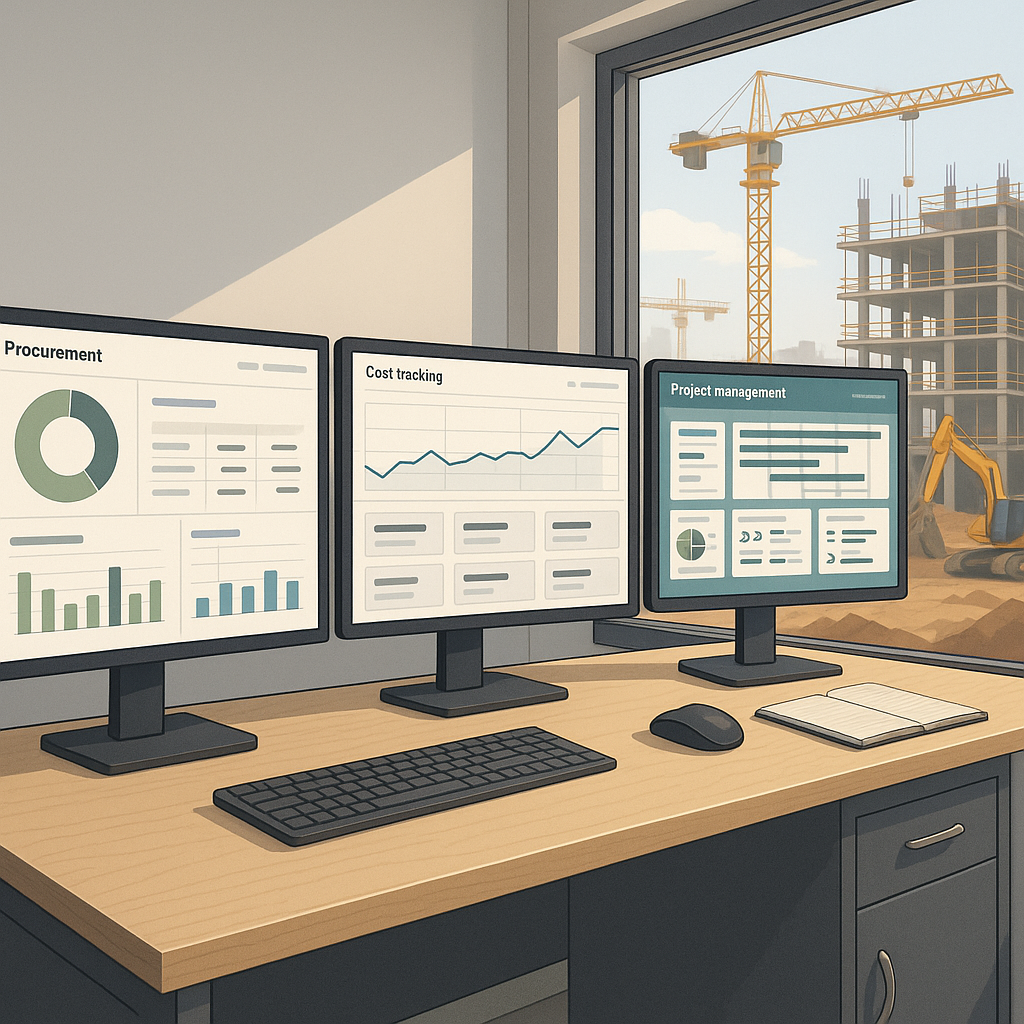
Enterprise software solutions aren’t just about automation. They’re about clarity. A good ERP (Enterprise Resource Planning) system integrates every part of your operation: preconstruction, project execution, procurement, HR, finance, and even equipment management. Instead of silos, you get a single source of truth.
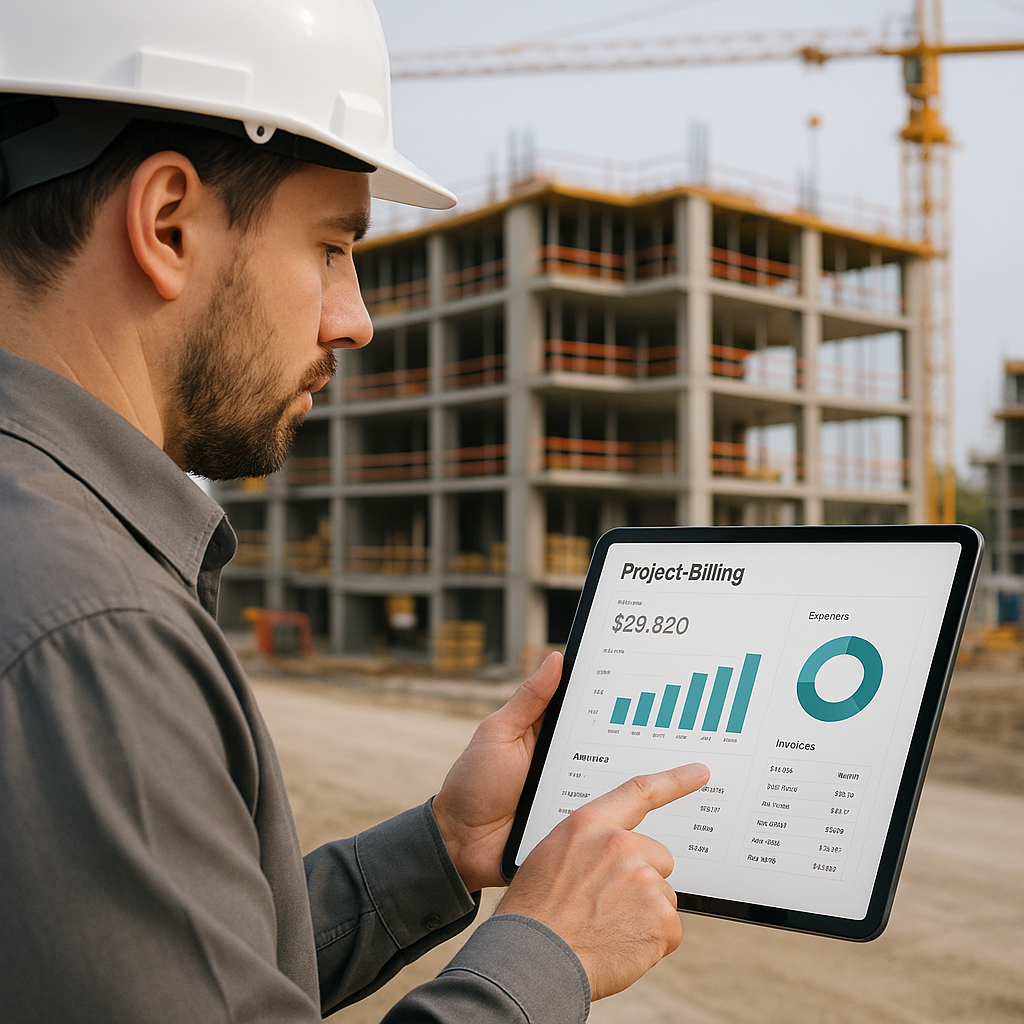
A key feature of many ERP systems is real-time project profitability tracking. This means you can see how your costs stack up against your budget at any point—down to the BOQ (Bill of Quantities), scope, or estimate level. No guesswork, no surprises.
A Practical Example: Budget Discipline in Procurement
Let’s zoom in on one specific area: procurement. In many cases, this is where contractors lose money due to manual processes that are chaotic, especially when managing multiple projects.
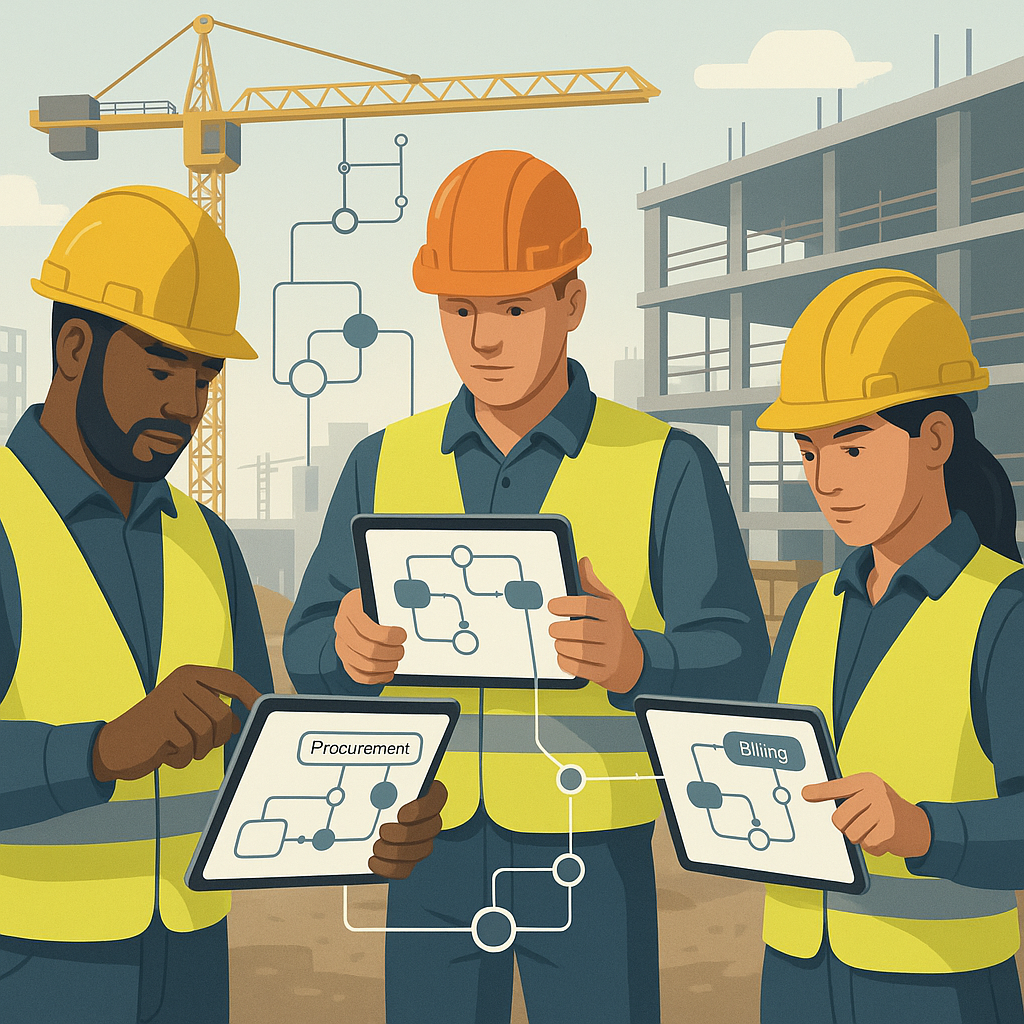
Illustrative example — A site manager submits a material requisition (MR) for cement. The procurement team sends out RFQs (Request for Quotation) to vendors, collects offers, and issues a purchase order (PO). Without an ERP, there’s no enforcement of budgets. A material purchase might balloon in cost because no one checked if the site manager padded their MR—or if the vendor added extra charges.
An ERP system can address this by enforcing budget validation at every step. Every MR, RFQ, and PO is tied back to the approved budget. If someone tries to overspend, the system flags it immediately. This kind of control can significantly reduce unnecessary expenses.
Why Real-Time Data Matters
You might be thinking, “We already track costs in Excel. Why do we need real-time data?” Here’s the thing: Excel is static. By the time you reconcile spreadsheets, the damage is done. Real-time data means you can act before a small issue becomes a big one.
Illustrative example — Say you’re tracking equipment costs. A dashboard shows that a concrete mixer is underutilized at one site but overbooked at another. With this insight, you can reallocate resources on the fly, saving on rental costs and improving efficiency.
Common Objections (And Why They Don’t Hold Up)
-
“We’re too small for an ERP.”
Many contractors assume enterprise software is only for large companies. However, SaaS platforms are often designed for small to mid-size contractors—companies managing multiple projects with limited resources. -
“It’s too expensive.”
Poor cost tracking can significantly reduce profitability. Compare that to the cost of an ERP subscription, and the potential return on investment becomes clear. -
“Our team won’t adapt.”
Adoption is always a hurdle, but modern platforms are much more intuitive. Role-based dashboards ensure each team member sees only what they need. Multi-level approval workflows also ensure accountability without bottlenecks.
FAQ
Q: How long does it take to implement an ERP?
A: Implementation timelines vary depending on the complexity of the business and the modules being deployed. Starting with the modules that solve your biggest pain points can streamline the process.
Q: What if our projects are in different locations?
A: Many ERP systems include multi-site management features, allowing you to track costs, payroll, and equipment across multiple locations from a single dashboard.
Q: Can it handle compliance for Indian and GCC markets?
A: Yes. Many ERP systems include features like GST/TDS computation, integration with accounting software for statutory reporting, and GCC-specific payroll functionalities.
Final Thoughts
If you’re still relying on disconnected systems, you’re leaving money on the table. A unified ERP doesn’t just track costs—it enforces budget discipline, protects margins, and gives you the clarity to run your business effectively.
Learn more at JobNext.ai - Construction ERP