HR Software in 2027: What’s Changing?
Managing HR across multiple sites isn’t getting easier. Contractors in the GCC and India face unique obstacles: dispersed teams, compliance mandates, and payroll snarls that seem to multiply the bigger their projects get. HR software is evolving fast to address these challenges, and the trends we’re seeing for 2027 promise tools tailored for the complexity of mid-sized operations. Here’s what’s coming — and why it matters.
Trend 1: Workforce Allocation By Match Scoring
Getting the right person on the right job is now a data game. HR systems are moving beyond basic scheduling and into skill-based allocation. A good example? JobNext’s workforce allocation feature uses a Match Score to help contractors assign staff based on skills, competency levels, and even relevant training certifications. This is a lifesaver when mobilizing teams across multiple sites.
How It Works
Say you’re staffing a project in Riyadh, and you need electricians with intermediate-level wiring skills. The Match Score algorithm cross-references your staff directory, training records, and job demands to suggest the best-fitting candidates. No more guesswork — just better decisions backed by actual data.
But here’s the catch: it only works if your HR system is updated. If your staff directory is missing certifications or skills, the Match Score will be useless. Contractors who neglect this step will still be stuck with manual allocation, which costs time and money.
Actionable Steps to Implement Match Scoring
- Audit Your Staff Records: Ensure skills, certifications, and competency levels are up-to-date in your HR system. Missing data makes the algorithm ineffective.
- Set Up Skill-Based Tags: Define skill requirements for every role in your projects. Create a standardized skill matrix for consistency.
- Leverage Reporting Features: Use analytics to track how well your Match Score suggestions align with actual performance on-site. Refine your system based on insights.
Why This Matters
Match Scoring isn’t just about convenience — it’s about maximizing productivity. When the right people are in the right roles, site efficiency improves, safety risks drop, and project timelines are easier to meet.
Trend 2: Biometric Attendance Systems for Multi-Site Payroll
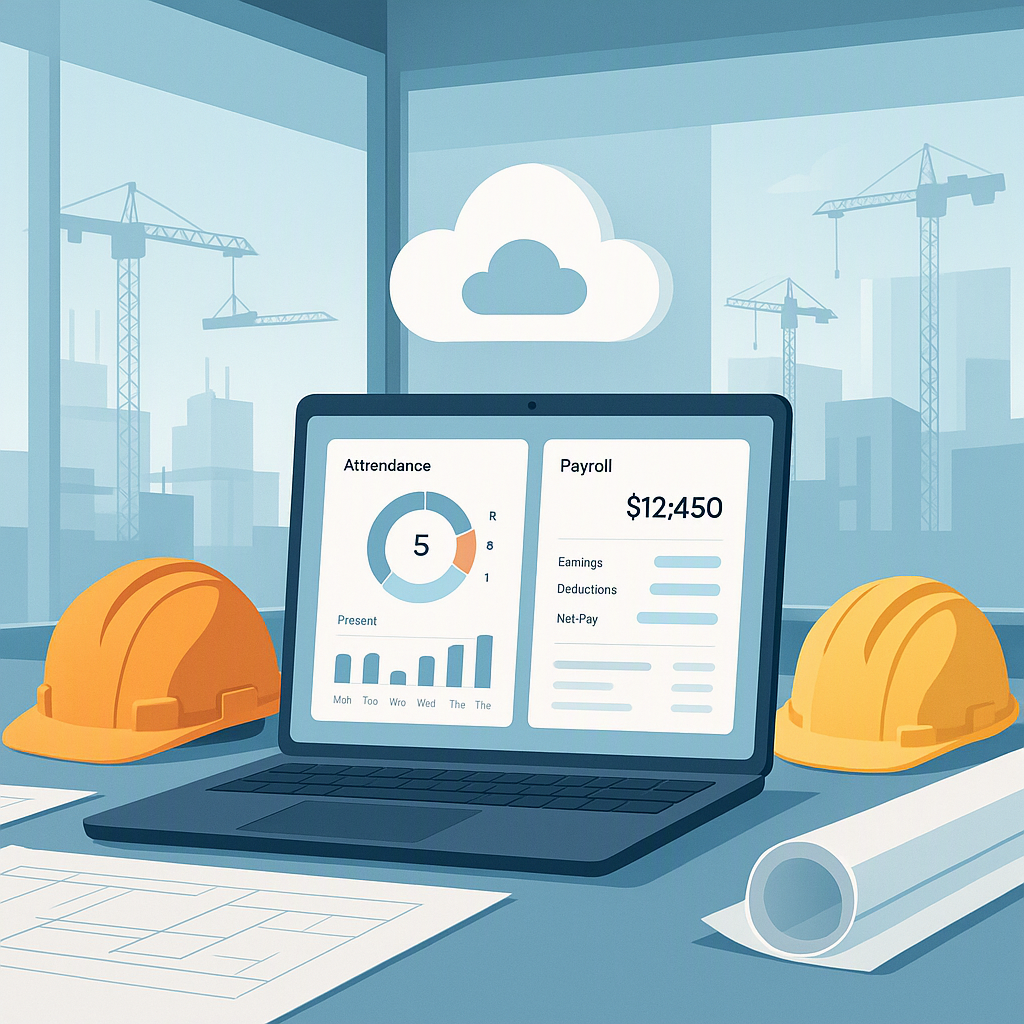
Payroll delays are an HR manager’s nightmare, especially when attendance sheets from 15 sites land on their desk. By 2027, biometric attendance systems paired with punch timestamps will be standard. These systems auto-sync attendance data to payroll modules, validating normal hours, overtime, and even holiday overtime in real-time.
Why Biometric Systems Are Game-Changers
Manual attendance tracking is prone to errors, and those errors lead to compliance risks. For example, GCC labor laws impose strict penalties for inaccuracies in overtime and holiday pay. Biometric systems not only eliminate manual errors but also ensure compliance by syncing real-time data directly to payroll modules.
Steps to Transition to Biometric Systems
- Evaluate Your Needs: If you manage fewer than three sites, a simpler system might suffice. For larger operations, look for features like multi-site support and real-time syncing.
- Train Your Teams: Ensure site managers and employees understand how to use biometric devices correctly. Errors often arise from user confusion.
- Integrate with Payroll: Choose systems that directly integrate with your existing HR software to avoid manual data uploads.
Compliance Implications
For contractors in Saudi Arabia or the UAE, where regulations mandate accurate overtime calculations, biometric systems aren’t optional. They’re essential to avoid fines and maintain worker trust.
Trend 3: AI-Powered Recruitment Pipelines
Hiring for large projects is chaotic. You need to fill dozens of positions in weeks, not months. HR software is catching up with this reality by integrating AI recruitment tools that track candidate pipelines from requisition to onboarding.
Key Features of AI Recruitment
- Bulk Candidate Upload: Quickly add large pools of applicants.
- Automated Resume Screening: Identify candidates who meet minimum qualifications.
- Pipeline Management: Monitor the status of each candidate in real time.
Imagine you’re hiring 50 workers for a new EPC project in Muscat. With AI, your HR system can bulk-upload candidates, screen their resumes for required qualifications, and even monitor expected joining dates. This keeps your pipeline clean and ensures positions don’t stay unfilled unnecessarily.
Pitfalls to Avoid
AI isn’t magic. If you input inaccurate or incomplete data, the system won’t deliver useful results. Garbage in, garbage out. Regularly update job descriptions and candidate data to keep the pipeline efficient.
Actionable Steps
- Standardize Job Descriptions: Use consistent language for required skills and certifications to make automated screening more effective.
- Test Your System: Run small hiring projects through the AI module before deploying it at scale.
- Monitor Metrics: Track recruitment KPIs like time-to-fill and cost-per-hire to measure the system’s impact.
Trend 4: Compliance-Driven Training Management
Regulatory compliance for safety and skill certifications will tighten in 2027, especially for contractors in industries like MEP and HVAC. HR software is adapting by making training management central to compliance workflows.
The Importance of Real-Time Training Tracking
JobNext’s training module lets contractors create, schedule, and track certification courses. For example, if your plumbing team in Dubai requires updated safety certifications, the system links training completion to employee profiles and ensures compliance records are accessible during audits.
How to Stay Ahead of Training Requirements
- Conduct a Compliance Audit: Identify which certifications are legally required for your trades.
- Automate Training Schedules: Use your HR software to set reminders for renewals.
- Centralize Records: Store all training documentation in a single, easily accessible location.
Why This Matters
Failure to comply with training requirements can result in hefty fines and project delays. By prioritizing training management, you not only protect your business but also create a safer work environment for your teams.
Trend 5: HR Dashboards for Workforce Analytics
Data is king, and HR dashboards are the throne. By 2027, contractors will expect HR systems to provide workforce analytics that go beyond headcounts. Metrics like payroll cost analysis, leave utilization, and staff turnover rates will be standard.
The Power of Analytics
If your turnover rate is spiking in Qatar, HR dashboards can help pinpoint whether it’s a pay issue or a site-specific problem. Tools like JobNext’s HR analytics module offer over 40 SSRS reports, including full payroll cost breakdowns and workforce distribution charts.
Steps to Make the Most of HR Dashboards
- Clean Your Data: Inconsistent inputs lead to unreliable insights. Regular audits are essential.
- Define Key Metrics: Focus on actionable KPIs that align with your business goals.
- Train Your Team: Ensure HR staff understands how to interpret and act on dashboard data.
Comparison Table: Traditional vs. Modern HR Systems
| Feature | Traditional HR Systems | Modern HR Systems (2027) |
|---|---|---|
| Workforce Allocation | Manual scheduling | Skill-based Match Scoring |
| Attendance Tracking | Manual sheets | Biometric systems |
| Recruitment Process | Manual screening | AI-powered pipelines |
| Training Management | Paper-based tracking | Compliance-driven modules |
| Workforce Analytics | Limited to headcounts | Comprehensive dashboards |
What This Means for Contractors
HR software is no longer about basic payroll and attendance. For contractors in India and GCC countries, evolving tools are tackling bigger issues: compliance, multi-site complexity, and workforce allocation. Systems like JobNext aren’t just nice-to-have anymore — they’re critical for staying competitive in a demanding market.
If you’re struggling with multi-site HR challenges, JobNext can help. Get started today and see how smarter tools can simplify your operations.
Learn more at JobNext.ai - Construction ERP