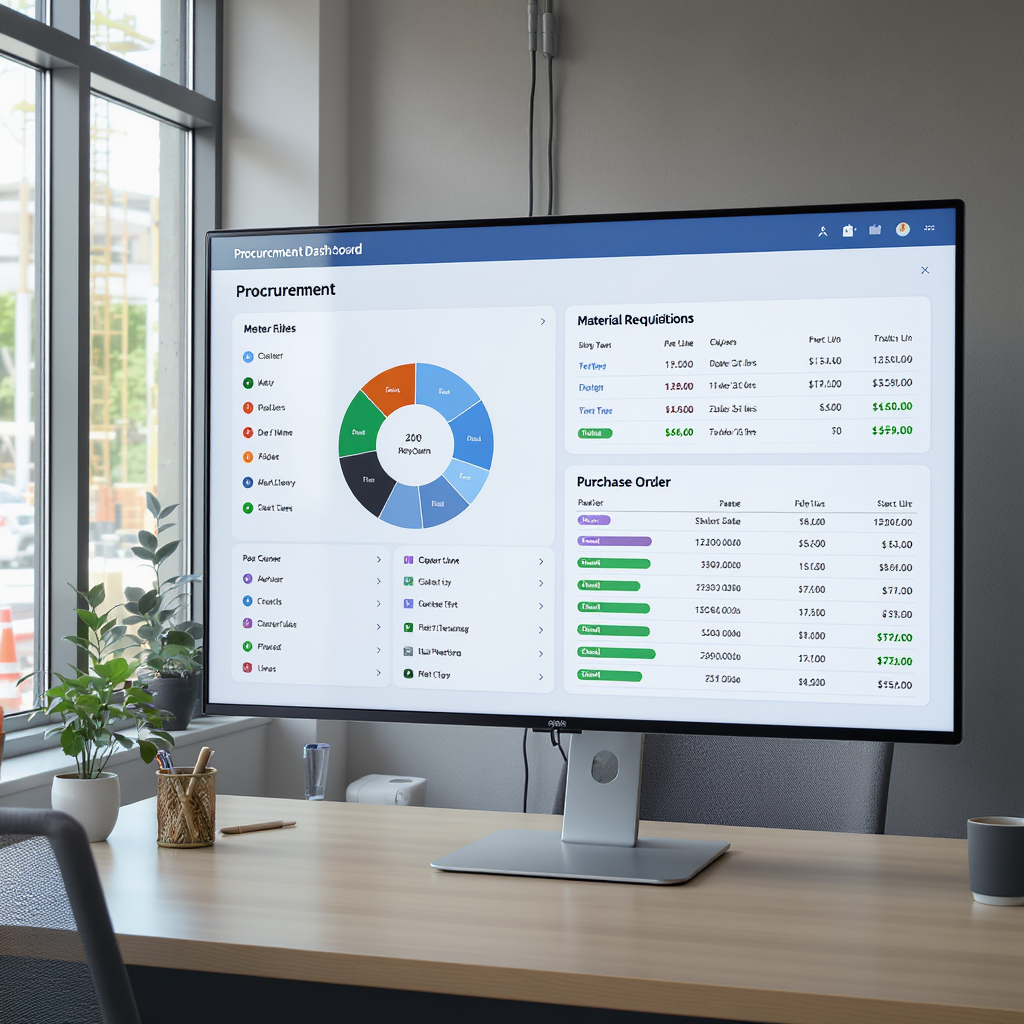
Procurement Chaos: A Common Contractor Problem
You’ve been there. A site manager requests materials on WhatsApp. The procurement team scrambles to find three quotes. By the time the PO is issued, the project is already behind schedule. Worse? The wrong materials show up, and now you’re stuck firefighting.
Procurement in construction has always been messy. But today, with razor-thin margins (2-7% on average) and supply chain volatility, that mess is unaffordable. If your team is still juggling spreadsheets, email threads, and phone calls, you’re bleeding time and money.
The Case for Automation
Automation isn’t just about saving time. It’s about eliminating the errors and inefficiencies that kill your bottom line.
Think about it: with a procurement automation tool, a single material requisition from the field can flow directly into your system. Quotes are auto-generated, approvals routed instantly, and POs issued without manual follow-ups. You go from chaos to control.
Take JobNext ERP, for example. Its procurement module connects your field teams, procurement staff, and suppliers in one system. No more lost requisitions or duplicate orders. Everything’s tracked, and nothing falls through the cracks.
This isn’t just theory. A mid-size contractor we worked with cut their PO cycle time from 4 days to 6 hours with automation. That’s how you hit project deadlines without breaking a sweat.
What Does It Actually Look Like?
Here’s a practical example:
- A foreman needs 200 bags of cement. They log the request into the mobile app.
- The system flags preferred vendors based on pricing history and delivery times.
- Procurement gets a notification, reviews the quotes, and approves the order in a click.
- The vendor receives the PO instantly and confirms delivery within the app.
No calls. No emails. No “did you check with so-and-so?”
And when the materials arrive, the receiving team updates the system, automatically syncing it with accounting. You’re not chasing paper invoices or reconciling mismatched numbers.
What About Edge Cases?
You might be thinking, “What if a vendor doesn’t use tech?” Or, “What if we need to negotiate pricing?” Good questions. Automation doesn’t mean eliminating human intervention where it’s needed. It means reducing the grunt work.
For vendors who aren’t tech-enabled, most systems let you record manual entries. And negotiations? You can still pick up the phone. But the system ensures everything’s documented and traceable. No more he-said-she-said when disputes arise.
Why Contractors Fail at Automation
Here’s a hard truth: most failures aren’t tech problems. They’re people problems.
If your team isn’t trained or they refuse to adopt the system, it doesn’t matter how good the software is. That’s why we always emphasize change management. Start small. Automate one process — like POs — before rolling out the entire system.
Our blog post on ERP Implementation for Contractors: The Phased Approach That Actually Works breaks this down step-by-step. It’s not sexy, but it works.
The ROI of Procurement Automation
Let’s talk numbers. A McKinsey study found that automating procurement can cut costs by 10-20%. For a contractor spending $10M annually on materials, that’s $1-2M back in your pocket.
And it’s not just cost. You’re saving time. If your procurement team spends 30 hours a week chasing approvals, automation frees up at least 20 of those hours. They can focus on strategic sourcing instead of admin tasks.
Final Thoughts
Procurement doesn’t have to be chaos. With tools like JobNext ERP, you can take control, save time, and protect your margins. The real question isn’t “Can we afford this?” It’s “Can we afford not to?”
If you’re ready to stop the madness, start small. Automate one process, measure the impact, and scale from there. It’s not magic. It’s just smart business.
Learn more at JobNext.ai - Construction ERP