The Hidden Cost of Revenue Leakage in Construction Billing
Revenue leakage. It’s a term that might not send alarm bells ringing at first, but trust me—it should. For construction companies, every unbilled or incorrectly billed task is a quiet margin killer. And this problem piles up fast.
Think about it: you’ve completed a milestone and your team is ready to invoice. But wait—did you account for all the measurements? What about those small change orders that weren’t documented properly? Or the tasks completed across multiple sites for the same customer? If even one invoice is missed, discounted, or disputed, you’re not just losing money—you’re also losing the time spent chasing corrections.
Why This Happens
Construction billing is complex. You’ve got running-account (RA) bills, stage-wise contracts, monthly service agreements, supply BOQs—the list goes on. Each method comes with its own rules, calculations, and potential pitfalls. Small errors in measurement documentation or oversight in billing contract terms can lead to revenue leakage.
According to JobNext's blog on billing methods, this chaos often starts with manual processes—Excel sheets, email chains, and disconnected systems that don’t talk to each other. Not ideal. Excel may be familiar, but it’s prone to human error, lacks workflow enforcement, and isn’t built for the nuanced, high-stakes world of construction contracts.
Actionable Steps to Identify Why Revenue Leakage Happens:
- Audit Your Processes: Conduct a detailed review of how your billing is managed. Are all tasks and measurements being captured? Are there discrepancies between work completed and billed?
- Identify Manual Bottlenecks: Pay close attention to where manual data entry or handwritten notes are being used. These tend to be the most error-prone parts of the process.
- Understand Contract Nuances: Review your contracts to identify any specific billing requirements (e.g., RA bills, stage-wise contracts) that your current system might not fully support.
How Enterprise Software Fixes It
Here’s where enterprise software solutions come in. Platforms like JobNext offer structured workflows that ensure every completed task gets properly accounted for and invoiced. For example, JobNext supports six billing methods: running-account bills, stage-wise billing, monthly invoicing, supply BOQs, combined bills, and one-time invoices. This flexibility means you can match the software’s methods to your contract terms—no more forcing square pegs into round holes.
Even better? The system locks your BOQ and measurement trails, creating an auditable record that prevents unauthorized changes. Every invoice is tied to its corresponding task, scope, or measurement, so nothing gets missed. Need to consolidate invoices across multiple projects for the same customer? That’s built in, too.
Key Features to Look for in Enterprise Software:
- Flexible Billing Workflows: Ensure the software supports multiple billing methods to accommodate different contract types.
- Real-Time Measurement Tracking: Look for tools that allow site teams to record measurements directly into the system, minimizing delays and errors.
- Audit Trail: Choose platforms that lock BOQs and measurements, ensuring transparency and accountability.
- Multi-Project Invoice Consolidation: If you regularly work on multiple projects for the same client, this feature will save time and prevent duplicate billing.
Real-World Application: RA Billing
Let’s take running-account (RA) billing as a practical case. RA bills depend on accurate measurement tracking—how much work was completed, how much material was used, and what’s left to do. Manual methods often fail to capture updated measurements or miss the linkage between measurements and invoices. This leads to under-billing or disputes over the final amount.
With enterprise software, the workflow is automated. Measurements are recorded directly from the site and tied to the BOQ item in real-time. When it’s time to invoice, the system generates the bill based on certified measurements. No manual calculations. No guesswork. Just clean, accurate billing.
Steps to Streamline RA Billing with Software:
- Digitize Measurement Entry: Equip site teams with mobile tools to record measurements directly into the system.
- Automate BOQ Linkage: Ensure that each recorded measurement is tied to the corresponding BOQ item to eliminate manual cross-referencing.
- Enforce Approvals: Use the software’s built-in approval workflows to certify measurements before invoicing.
- Generate Automated RA Bills: Allow the system to handle calculations based on certified data, reducing errors and disputes.
The Bigger Picture: Transforming Business Operations
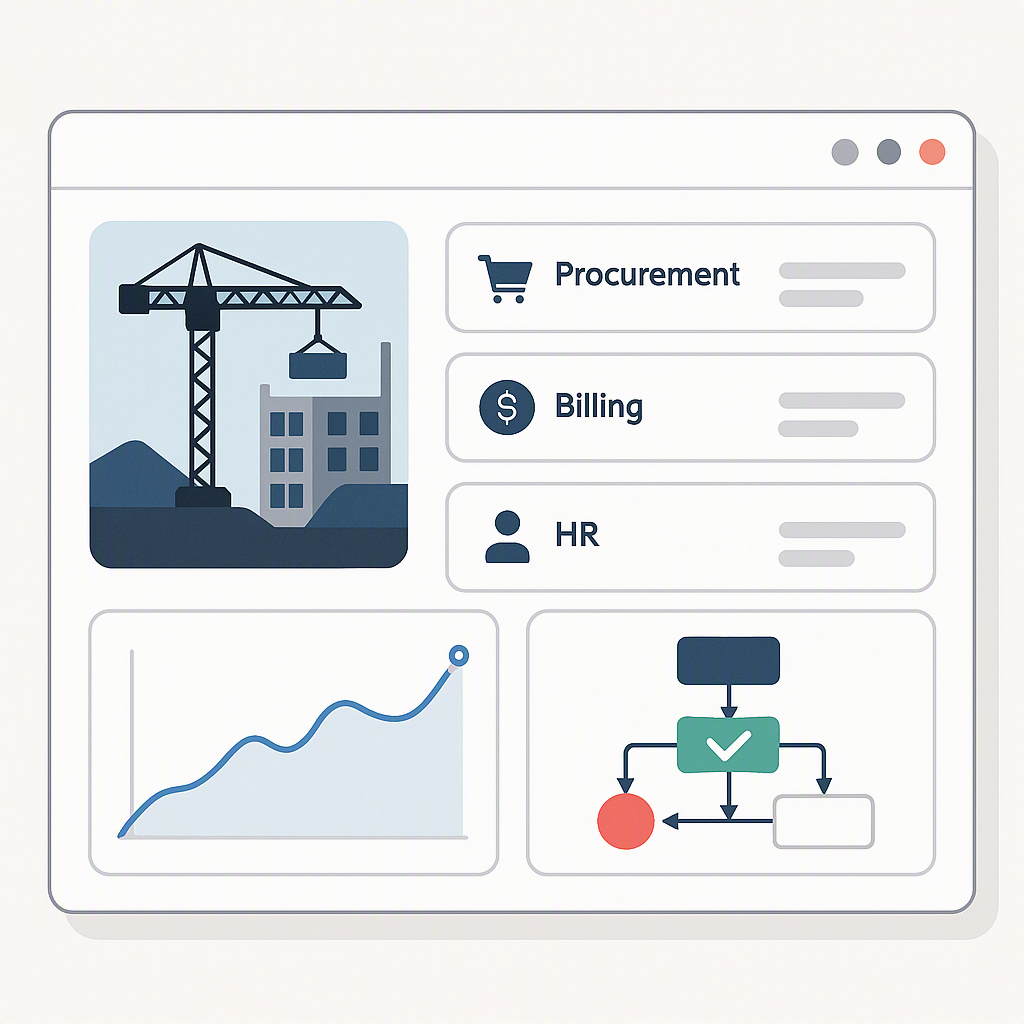
Revenue leakage is just one example of how enterprise software solutions transform businesses. By unifying disconnected systems—billing, procurement, HR, equipment tracking—into a single platform, these tools eliminate redundancy, save time, and enforce discipline across all workflows.
And it’s not just about cutting costs. When you’ve got real-time visibility into project profitability at every stage, you can make smarter decisions. Should you fast-track procurement for a high-margin project? Can you afford to hire more skilled labor this quarter? What’s the impact of a delayed subcontractor payment on your cash flow? Enterprise software makes these questions easier to answer.
Common Mistakes to Watch For
- Skipping the audit trail: Always use systems that provide a clear record of measurements and invoices. Disputes are easier to resolve when you have proof.
- Over-relying on Excel: Spreadsheets are great for one-off calculations, but they don’t enforce workflows. You risk missing steps—and margins.
- Ignoring contract-specific billing methods: If your software doesn’t match your contracts, you’ll end up with manual corrections that waste time and create errors.
Decision Framework: Manual Processes vs. Enterprise Software
| Feature | Manual Processes | Enterprise Software |
|---|---|---|
| Billing Methods Supported | Limited (manual adaptation) | Multiple, built-in |
| Error Rates | High | Low |
| Time to Generate Invoices | Long | Short |
| Audit Trail | Manual, incomplete | Automated, comprehensive |
| Scalability | Poor | Excellent |
Call to Action: Fix Revenue Leakage Today
If you’re struggling with billing chaos, enterprise software like JobNext can help. It’s designed for contractors who need structured workflows, real-time tracking, and complete control over margins. Get started free →
Learn more at JobNext.ai - Construction ERP