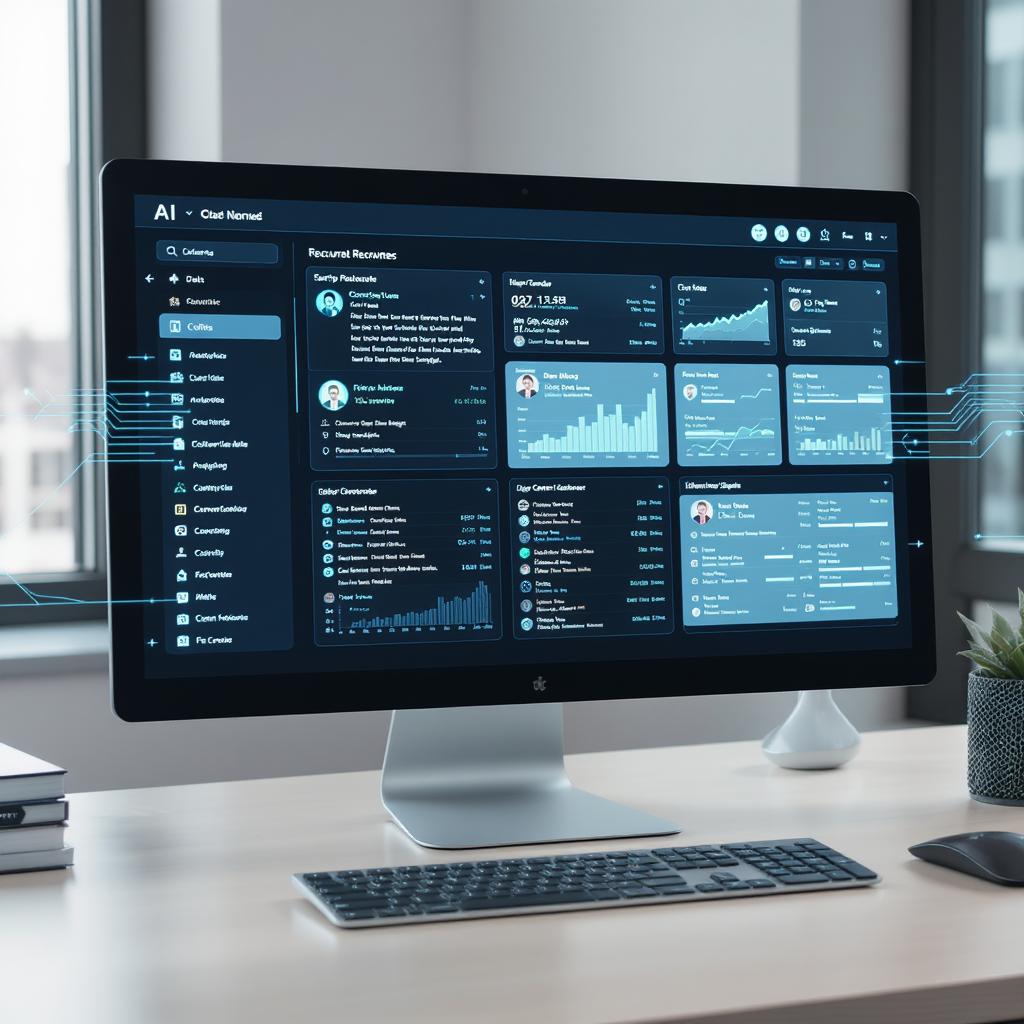
Resume Screening Isn’t Just a Pain — It’s a Bottleneck
Let’s face it: manually screening resumes is a nightmare. According to SHRM, the average recruiter spends 23 hours screening resumes per hire. That’s almost three full workdays just sifting through applications. And let’s be honest, humans aren’t great at staying unbiased or catching every detail when reviewing hundreds of resumes back-to-back.
Here’s where AI steps in. Machine learning algorithms can scan thousands of resumes in minutes, flagging top candidates based on skills, experience, and even nuanced patterns like career progression. Tools like TalentNext AI combine natural language processing (NLP) with predictive analytics to find matches that recruiters often miss. Think about it: how many great candidates have you overlooked because their resume didn’t use the exact keywords you were searching for? Machines don’t have that problem.
Candidate Matching: It’s Not About Keywords Anymore
Traditional applicant tracking systems (ATS) are keyword-obsessed. If a candidate’s resume doesn’t match your job description verbatim, they’re out. But AI-powered systems like TalentNext AI go beyond keywords. They analyze context. For example, if you’re hiring a project manager, the system might identify candidates with “team leadership” or “budget management” experience — even if “project manager” isn’t explicitly listed.
This isn’t just theory. A recent study by Gartner found that companies using AI in recruitment improved their time-to-hire by 40% and reduced cost-per-hire by 35%. When you’re scaling fast or competing for top talent, those numbers aren’t just nice-to-haves — they’re game-changers.
What About Bias? Isn’t AI Prone to That Too?
It’s a fair question. AI isn’t perfect. In fact, early attempts at AI recruitment (remember Amazon’s failed AI hiring tool?) were riddled with bias because the systems were trained on biased data. But today’s machine learning models are designed with fairness in mind. By anonymizing candidate data or excluding certain variables (like gender or race), modern tools actively reduce bias.
Of course, no system is flawless. That’s why we recommend pairing AI with human oversight. Let the machine handle the heavy lifting — screening, ranking, and shortlisting — but keep humans in the loop for final decisions. It’s the best of both worlds.
Real-World Example: Cutting Through the Noise
We worked with a mid-sized construction firm that was drowning in resumes for skilled labor positions. Their HR team was small — just three people — and they were losing candidates because the hiring process took too long. After implementing TalentNext AI, they saw immediate results. The AI screened over 1,200 resumes in 48 hours, identified 50 high-potential candidates, and flagged five “hidden gems” the team would’ve missed entirely. The result? Time-to-hire dropped by 60%, and they filled roles faster than their competitors.
This isn’t just about saving time. It’s about winning the talent war. And in industries like construction, where skilled labor shortages can derail entire projects, speed and accuracy are everything. (For more on how construction firms are leveraging technology, check out this blog post.)
The Future of Recruitment Is Already Here
If you’re still relying on manual processes or outdated ATS systems, you’re not just behind — you’re at a competitive disadvantage. AI-powered recruitment isn’t a luxury anymore. It’s a necessity. Tools like TalentNext AI are affordable, scalable, and proven to deliver results. And let’s be honest, do you really want your recruiters spending hours on tasks a machine can handle in minutes?
The job market isn’t slowing down. Neither should your hiring process.
Learn more at JobNext.ai - Construction ERP