The Hidden Cost of Procurement Chaos
If you're running a construction business, you've probably felt the pain of procurement gone wrong. A supplier misses a delivery. Rates aren't locked, so your costs balloon. Your project timelines slip, and suddenly, you're explaining to the client why their invoice doesn't match the estimate. Sound familiar?
A 2022 McKinsey report found that poor procurement practices can erode up to 5% of project margins. For a mid-size contractor doing ₹5 crore in annual projects, that's ₹25 lakh in pure loss. And it's not just about money — the reputational damage can be even worse. Imagine losing a key client because delays and cost overruns make you look unreliable. It’s not a stretch; it happens more often than most contractors care to admit.
So, what's the fix?
Why Enterprise Software Changes the Game
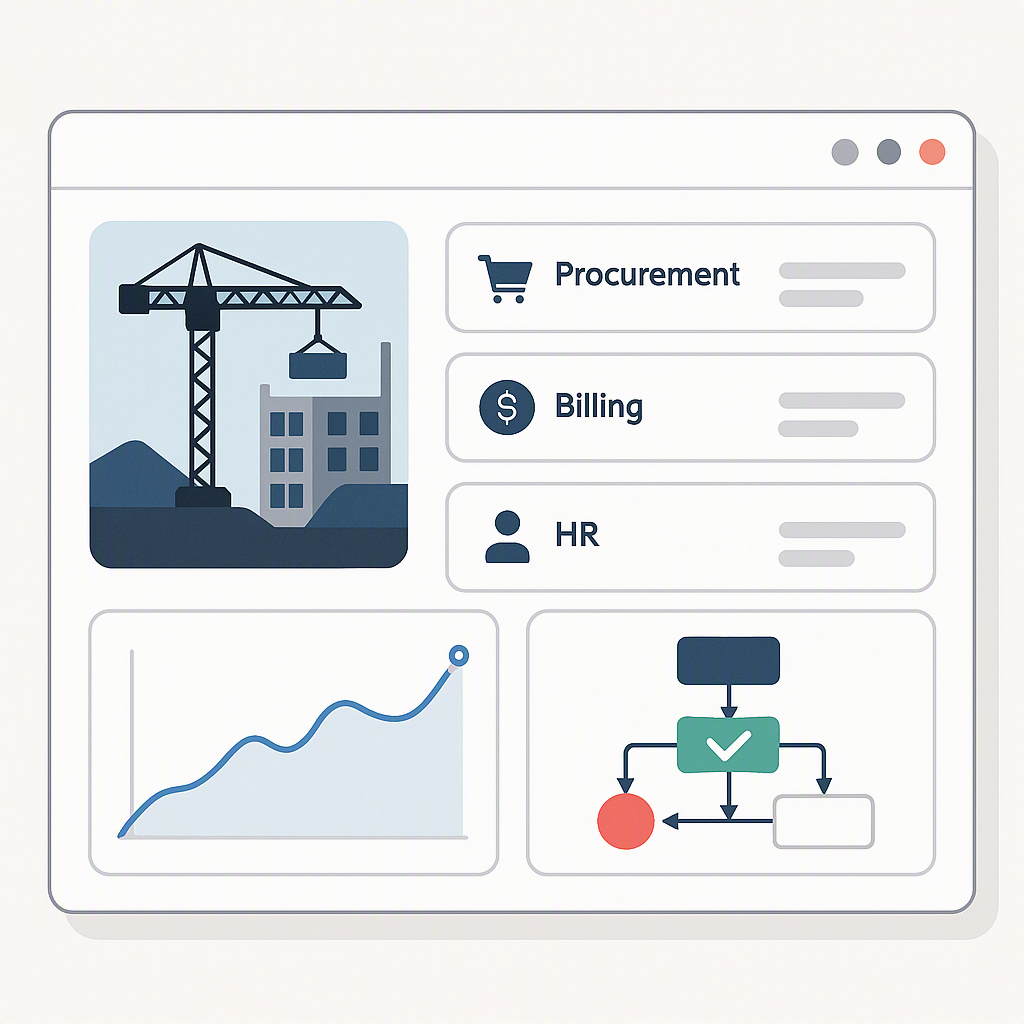
The solution isn't throwing more people at the problem or chasing suppliers endlessly. It's about structure. Enterprise software like JobNext provides a procurement workflow that eliminates chaos. Here's how:
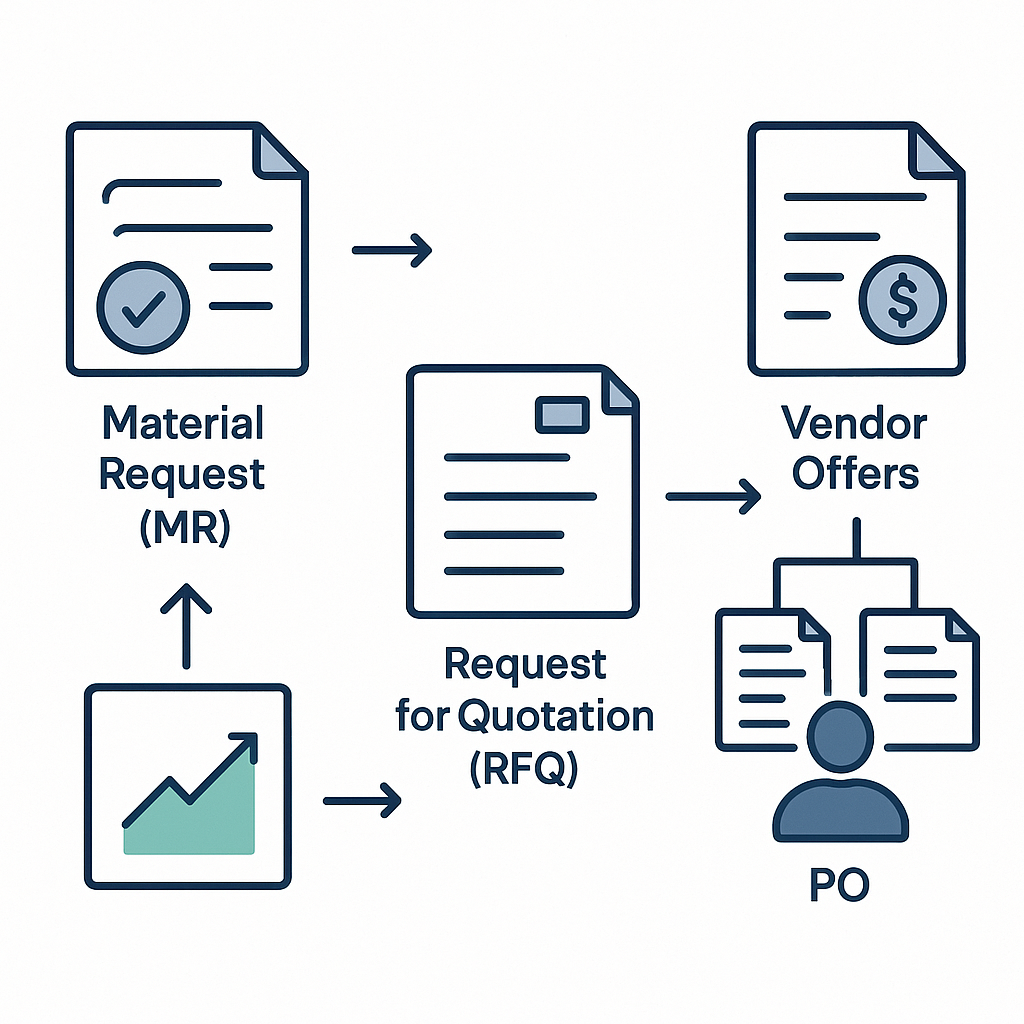
1. Material Requests (MRs): Get Rid of Informal Communication
Instead of WhatsApp messages, phone calls, or random emails, every request is logged in a system. Need 500 bags of cement? Raise an MR with exact specs, quantities, and deadlines. This eliminates ambiguity and makes your needs clear to everyone involved.
Example: A contractor in Pune was constantly battling delivery delays because their team relied on phone calls to place orders. By switching to JobNext, every material request became a logged, trackable task. As a result, suppliers had no room for "I didn’t know" excuses, cutting delivery delays by 30%.
2. Requests for Quotations (RFQs): Standardize and Compare Supplier Offers
Once an MR is raised, an RFQ process is triggered. Vendors receive structured, comparable requests. No vague descriptions, no missing details. This ensures apples-to-apples comparisons, saving hours of back-and-forth.
Actionable Tip: If you're still sending RFQs via email, you're leaving money on the table. A system like JobNext can automate this process, ensuring RFQs are detailed and consistent. This not only saves time but also ensures you're comparing comparable quotes.
3. Vendor Offers: Let the System Do the Math
Offers are logged and compared automatically. The system highlights the best price and terms, saving hours of manual work.
Concrete Data: One mid-size contractor using JobNext reported a 15% reduction in material costs within the first three months of implementation. The reason? They could easily identify vendors offering the best rates and terms without manual errors creeping in.
4. Purchase Orders (POs): No More Missed Approvals
Once approved, a PO is issued directly from the system. No back-and-forth emails. No missed approvals or forgotten terms. Everything is documented.
Case Study: A contractor managing a ₹50 crore project in Delhi used JobNext to streamline POs. Before implementing the system, they averaged 15 errors per month in POs due to manual entry mistakes. After implementation? Zero errors.
5. Approval Chains: Enforce Accountability
Configurable workflows ensure that nothing moves forward without the right sign-offs. Need the CFO's approval for high-value orders? The system enforces it.
Comparison: Without a structured approval chain, projects often hit bottlenecks because key stakeholders aren’t looped in on time. With JobNext, approval times were reduced by 50% for one contractor handling multi-site operations.
Real-Time Cost Tracking: The Cherry on Top
Procurement isn't just about getting materials on-site — it's about getting them at the right price. With JobNext, every MR, RFQ, and PO is tied back to the project's budget. You see in real-time if you're over or under. No more surprises at the end of the month when Finance reconciles the books.
This kind of visibility is a game-changer. A $1.2B factory case study on JobNext's blog highlights how contractors lose margins when cost tracking is reactive. By contrast, those with real-time insights stay ahead of the curve.
Example: Imagine you're building a ₹3 crore residential project. Cement prices spike mid-project, but because you're tracking costs in real time, you spot the trend early. This allows you to renegotiate with suppliers or adjust budgets proactively, saving ₹2-3 lakh over the course of the project.
The Obvious Objection: "We Already Have a System"
You might be thinking, "We already use spreadsheets and email for procurement. Why change?" Here's the problem: spreadsheets and emails don't scale. They don’t enforce accountability, and they don’t give you real-time insights. When your business grows, the cracks in your system become chasms.
Comparison Table: Spreadsheets vs. JobNext
| Feature | Spreadsheets & Emails | JobNext |
|---|---|---|
| Scalability | Limited | Scales with business size |
| Real-Time Tracking | Manual updates; prone to error | Automated, real-time insights |
| Approval Workflows | Manual emails; easy to bypass | Enforced through system |
| Error Rate | High (manual entry) | Low (automated processes) |
| Vendor Comparison | Time-consuming; prone to bias | Automated; apples-to-apples comparisons |
| Audit Trails | Difficult to maintain | Complete, centralized, and searchable records |
Learn more at JobNext.ai - Construction ERP