Top 5 Challenges in Talent Acquisition and How JobNext Solves Them
Hiring isn’t what it used to be. If you’re in construction or contracting, you’ve likely felt it: the talent pool isn’t as deep, and the competition for skilled workers is fiercer than ever. Add to that the logistical chaos of managing multi-site operations, and you’ve got a real headache in your HR department.
We’re not just talking about finding forklift operators and welders. Even HR teams themselves are stretched thin, juggling compliance paperwork, onboarding, and last-minute site allocations.
So, what’s the fix? Technology. Specifically, platforms like JobNext that don’t just streamline recruitment but anticipate the challenges contractors face today.
Let’s break it down—five challenges in talent acquisition, and how JobNext’s features tackle them.
1. Extended Hiring Cycles
Here’s the reality: the best candidates don’t sit around waiting for your job offer. In 2026, hiring cycles have stretched to ridiculous lengths, with firms losing top talent simply because the process takes too long. According to SHRM, the average time-to-hire for skilled roles has increased by 30% since 2020. Why? Layers of approvals, delayed interviews, and disorganized pipelines.
Why It Happens
Extended hiring cycles in industries like construction stem from several factors:
- Multiple approval layers: Recruitment often involves managers, department heads, and HR. If even one of them delays, the timeline drags.
- Manual tracking: Many HR teams still rely on spreadsheets or fragmented systems, leading to inefficiencies.
- Scheduling conflicts: Coordinating interviews across busy schedules can stall decision-making.
Actionable Steps
- Streamline Approvals: Use a centralized system where hiring managers and HR can approve requisitions in real-time.
- Automate Workflow: Eliminate manual tracking by adopting tools that automate recruitment processes.
- Set Deadlines: Establish strict timelines for each hiring stage.
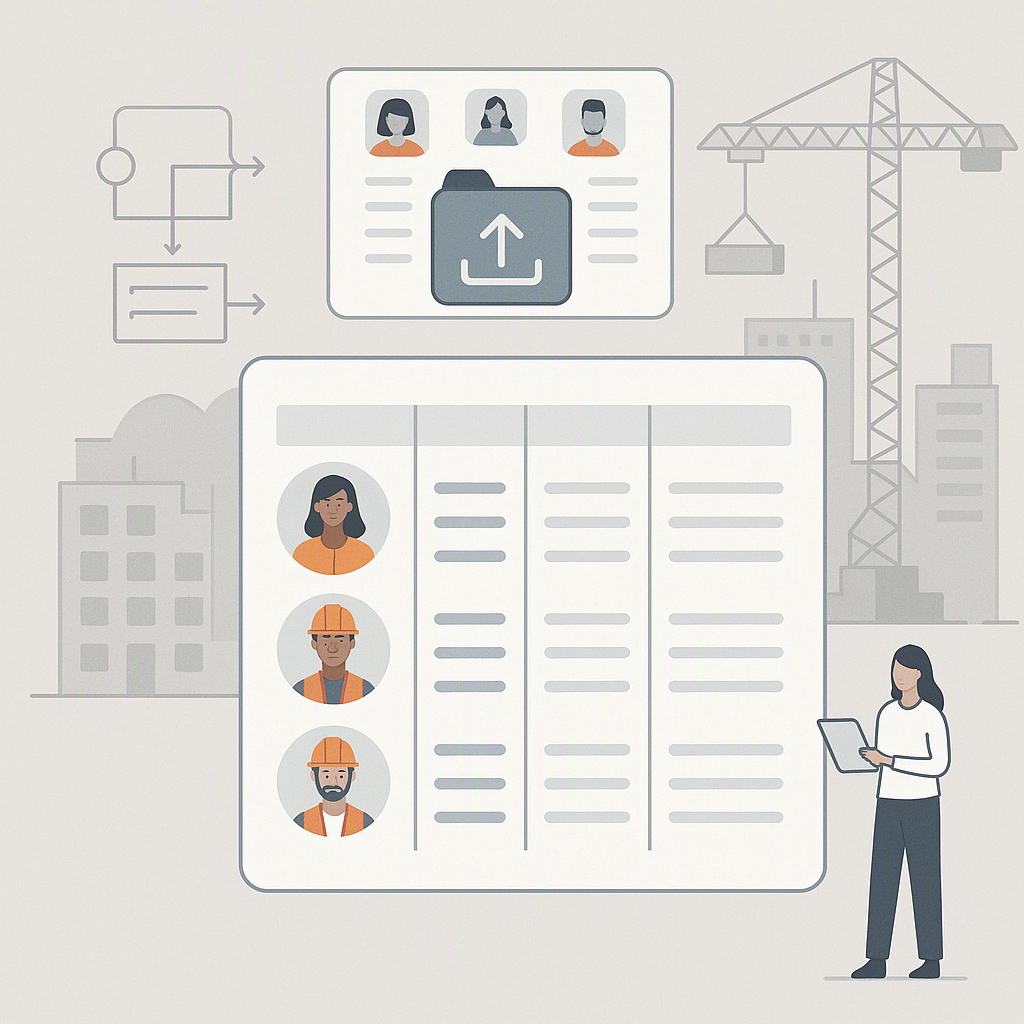
How JobNext helps: One standout feature is its end-to-end recruitment workflows, specifically designed for contractors. From raising mobilization requests to onboarding, every step is mapped out with automated prompts. HR teams can bulk-upload candidate profiles, instantly track statuses, and move shortlisted candidates through approval chains.
For example, when a project manager raises a staffing need, JobNext kicks off a requisition tied to the specific job. Approvals happen in real time, not days later. Once approved, HR can bulk-upload candidates, screen them using a Match Score system, and finalize onboarding—all within the same platform.
Result? Faster hires without cutting corners.
2. Skills Gaps
It’s one thing to find candidates. It’s another to find the right candidates. A 2023 McKinsey report found that nearly 87% of organizations struggle to fill roles requiring specialized skills.
In construction, it’s even worse. Need an AutoCAD operator? Good luck. And when you do find one, they’ve probably got three competing job offers.
Why It Happens
- Limited training: Many skilled roles require specialized certifications or experience, and fewer candidates are entering these fields.
- High competition: Skilled workers are in demand across industries, not just construction.
- Poor visibility: HR often doesn’t have a clear picture of candidate qualifications.
Actionable Steps
- Build Better Talent Pools: Maintain a database of pre-screened candidates with verified skills.
- Invest in Upskilling: Partner with training institutes to develop workers for niche roles.
- Use Skill Tags: Categorize candidates by their expertise to simplify searches.
How JobNext helps: JobNext’s Candidate Module doesn’t just track resumes—it structures the entire recruitment pipeline. You can tag candidates by specific skills like welding, electrical work, or AutoCAD expertise. Better yet, you can assign competency levels, so HR knows whether someone is a beginner or an expert.
This isn’t just a database—it’s actionable intelligence. Need to hire ten electricians for a new project? Filter candidates by skill, competency level, and availability. JobNext even tracks expected joining dates to avoid staffing delays.
3. Multi-Site Staffing Complexity
Picture this: you’re managing five projects across three cities. You’ve got workers in Pune, Hyderabad, and Dubai, all needing to be allocated correctly. One site is short on welders, another has six extra, and somehow, payroll is a mess.
Multi-site operations are a logistical nightmare. And when you’re hiring for these jobs, the complexity multiplies.
Why It Happens
- Lack of centralized systems: HR teams often manage staff allocations manually, leading to errors.
- Dynamic requirements: Construction projects frequently change staffing needs mid-way.
- Communication gaps: Teams across locations struggle to stay in sync.
Actionable Steps
- Centralize Workforce Data: Use a platform that tracks employee locations, job roles, and availability.
- Forecast Staffing Needs: Plan allocations based on project timelines and historical data.
- Automate Reassignments: Use tools that suggest reassignments based on availability and match scores.
How JobNext helps: The HR Allocation Module simplifies this chaos. Once candidates are onboarded, JobNext matches them to job requirements using its Match Score feature. It ranks employees based on location, skills, and availability, ensuring the right person ends up on the right site.
For example, a welding subcontractor in Oman needed 15 welders for a rush job. Using JobNext, their HR team allocated existing staff with high match scores and filled remaining gaps by bulk-uploading and filtering candidates with welding expertise. The job was staffed in days, not weeks.
4. Compliance Headaches
Hiring isn’t just about finding workers. It’s also about managing the mountain of paperwork that comes with it: contracts, statutory deductions, GST compliance, TDS filings, and more. Miss a deadline, and you’re looking at fines—or worse.
Why It Happens
- Complex regulations: Compliance rules differ based on location, industry, and job role.
- Manual tracking: HR teams often struggle to stay up-to-date with evolving regulations.
- High stakes: Fines and penalties for non-compliance are costly and damaging.
Actionable Steps
- Automate Compliance Tracking: Use software that flags deadlines and automates filings.
- Integrate Payroll and Compliance: Connect payroll systems directly to compliance tools.
- Stay Updated: Regularly review regulatory changes affecting your industry.
How JobNext helps: JobNext’s HR and Payroll modules are built for compliance-heavy industries like construction and facilities management. From PF and ESI deductions to GST and TDS filings, everything is tracked automatically. The system even integrates with Tally for statutory reporting in India.
This isn’t just a time-saver; it’s a risk reducer. You don’t want regulators knocking on your door over a missed GST filing. JobNext ensures they don’t.
5. Candidate Engagement
Here’s a hard truth: candidates ghost employers if they feel ignored. A LinkedIn report found that poor engagement is one of the top reasons candidates drop out of hiring processes.
This problem is even worse in construction, where the hiring process involves multiple steps—often across different locations and departments. Without clear communication, candidates are left in the dark.
Why It Happens
- Lack of updates: Candidates feel neglected when they don’t receive timely updates.
- Complex processes: Multistep hiring can frustrate candidates.
- No follow-up: HR teams often miss opportunities to re-engage dropped-out candidates.
Actionable Steps
- Send Regular Updates: Keep candidates informed at every stage of the process.
- Simplify Communication: Use tools that automate notifications for interviews and status changes.
- Re-engage Dropped Candidates: Build workflows to reconnect with candidates who drop out.
How JobNext helps: JobNext’s Candidate Module includes real-time status tracking and notifications. Candidates can see exactly where they stand, whether they’re being shortlisted, interviewed, or onboarded. HR teams can send automated updates via email or SMS, keeping candidates engaged at every stage.
Comparison Table: JobNext Features vs Traditional HR Tools
| Feature | JobNext | Traditional HR Tools |
|---|---|---|
| End-to-End Workflow | Fully automated | Manual and fragmented |
| Match Score | AI-driven candidate ranking | No ranking system |
| Compliance Integration | Automated filings | Manual tracking |
| Multi-Site Staffing | Centralized allocation | Spreadsheet-based |
| Candidate Engagement | Real-time updates | No automated communication |
The Bottom Line
Talent acquisition is a pain point that won’t go away anytime soon. But tools like JobNext can make it manageable. From speeding up hiring cycles to ensuring compliance, it’s built for real-world challenges contractors face every day.
Learn more at JobNext.ai - Construction ERP