₹25 Lakh Lost to Procurement Chaos: The ERP Fix Businesses Miss
Let’s talk about a problem no one seems to want to admit: procurement chaos. If your business still runs on emails, Excel sheets, and frantic phone calls to vendors, you’re probably bleeding money. How much? Contractors in India and GCC lose at least ₹25 lakh annually to manual procurement errors.
This isn’t just about typos or delays (though those happen too). It’s about margin erosion, missed deadlines, and the complete lack of control over spending. The good news? Enterprise software solutions, specifically SaaS ERP platforms like JobNext, can fix this — and often faster than you think.
The Procurement Problem: Why Manual Systems Fail
Picture this: Your site manager urgently needs 500 bags of cement. They email procurement, who then reaches out to three vendors for quotes. By the time quotes come back, prices have jumped because of market fluctuations. The order gets delayed. The project stalls. And who’s tracking if the vendor even delivered on time?
This manual process is riddled with issues:
- No visibility: Where’s the material? Who approved the purchase? No one knows.
- Price inconsistencies: Without structured vendor management, you pay whatever is quoted.
- Approval bottlenecks: Your team wastes hours chasing signatures.
- Lost documents: One misplaced invoice can throw off your entire reconciliation process.
Take, for example, a mid-sized contractor in Pune. They were relying on Excel sheets to track procurement for over 15 projects. When an audit revealed ₹18 lakh in unaccounted purchase orders, their finance team spent weeks reconciling bills manually. Meanwhile, projects were slowed down because no one knew what materials were available. Multiply this across multiple projects, and the costs spiral out of control.
You might think, “We’ve managed like this for years. Why change now?” The answer is simple: competition. If your margins are already razor-thin, you can’t afford inefficiencies.
How Enterprise Software Fixes Procurement Chaos
Enterprise software solutions like JobNext bring structure to what’s often a free-for-all. Here’s how it works:
- Material Requests (MRs): Site managers raise requests directly in the system. Each request is linked to a specific project.
- RFQs (Request for Quotes): Procurement teams send structured RFQs to pre-approved vendors. These RFQs are standardized, ensuring no critical details are missed.
- Vendor Offers: Responses are logged, compared, and approved within the platform. Automated comparison tools ensure you always pick the best deal.
- Purchase Orders (POs): Once approved, POs are auto-generated and sent to vendors. The system also tracks delivery timelines.
- Delivery Tracking: Every delivery is tracked against the PO, ensuring nothing goes unaccounted. If there’s a mismatch between the order and the delivery, the system flags it for review.
Actionable Steps to Streamline Your Procurement Process
- Standardize Your Workflow: Identify repetitive tasks (e.g., raising MRs, sending RFQs) and digitize them. Tools like JobNext allow you to automate these steps.
- Pre-Qualify Vendors: Use your ERP to maintain a vetted list of vendors. This reduces the time spent searching for reliable suppliers.
- Track Every Rupee: Link every purchase request and PO to a specific budget. This ensures you don’t overspend.
- Monitor KPIs: Use dashboards to track key metrics, such as average purchase cycle time and vendor performance.
- Integrate Systems: Connect your ERP with accounting software (e.g., Tally) for seamless reconciliation.
The entire workflow is digitized, leaving no room for guesswork. And the best part? Every transaction is tied back to your budget. No more overspending.
Real Results: ₹25 Lakh Saved
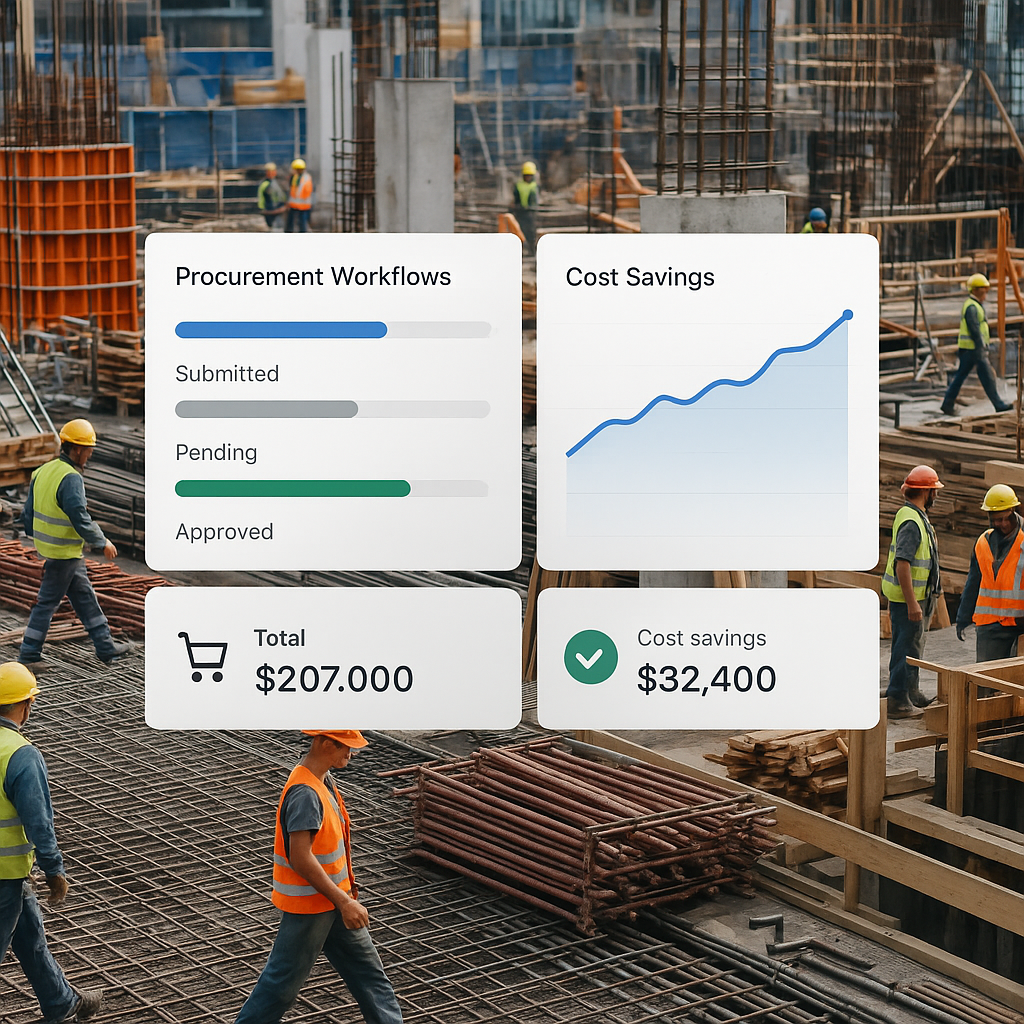
In one case study, a mid-sized EPC contractor in Oman reduced procurement delays by 40% within three months of switching to JobNext. Their finance controller reported saving ₹25-30 lakh annually just from better vendor negotiations and on-time material delivery.
Another example comes from a construction firm in Gujarat. Before adopting an ERP, they frequently faced disputes with vendors over delivery timelines. By using JobNext’s delivery tracking system, they reduced disputes by 60% and improved vendor relationships. Their CFO noted a 10% improvement in working capital efficiency, as material delays no longer held up billing cycles.
These aren’t isolated stories. According to a McKinsey report, businesses that digitize procurement see an average cost reduction of 8-12%. For a company spending ₹5 crore annually on materials, that’s ₹40-60 lakh saved per year.
Why Procurement Chaos Is Worse Than You Think
You might be thinking, “Okay, so we lose money sometimes. It’s not that bad.” But here’s the thing: procurement chaos doesn’t just cost you money. It costs you trust.
- Client Trust: Missed deadlines due to material delays make your clients question your reliability. For example, a contractor in Hyderabad lost a ₹10 crore project after repeated delays caused by procurement bottlenecks.
- Team Morale: Constant firefighting burns your team out. Employees stuck in reactive workflows are 25% more likely to quit within a year.
- Vendor Relationships: Late payments and unclear orders frustrate your suppliers, leading to less favorable terms in the future.
And let’s not forget compliance. In regions like India, GST and TDS errors can lead to hefty penalties. JobNext’s automated compliance features, like GST/TDS auto-computation and Tally integration, eliminate this risk.
Why SaaS ERP Is the Only Scalable Solution
Some businesses try to patch the problem with standalone tools — maybe a procurement app here, an accounting software there. But these disconnected systems create their own chaos. Data doesn’t sync. Approvals fall through the cracks. And you’re back to square one.
Here’s a comparison of manual systems vs. ERP platforms:
| Feature | Manual Systems | SaaS ERP (e.g., JobNext) |
|---|---|---|
| Cost Tracking | Fragmented | Centralized |
| Delivery Monitoring | Manual follow-ups | Automated tracking |
| Vendor Management | Ad-hoc | Standardized |
| Compliance | Error-prone | Automated |
| Scalability | Limited | Seamless |
If you’re serious about growth, a SaaS ERP is the only viable path forward.
Learn more at JobNext.ai - Construction ERP