₹1.2 Crore. Gone. Every. Year.
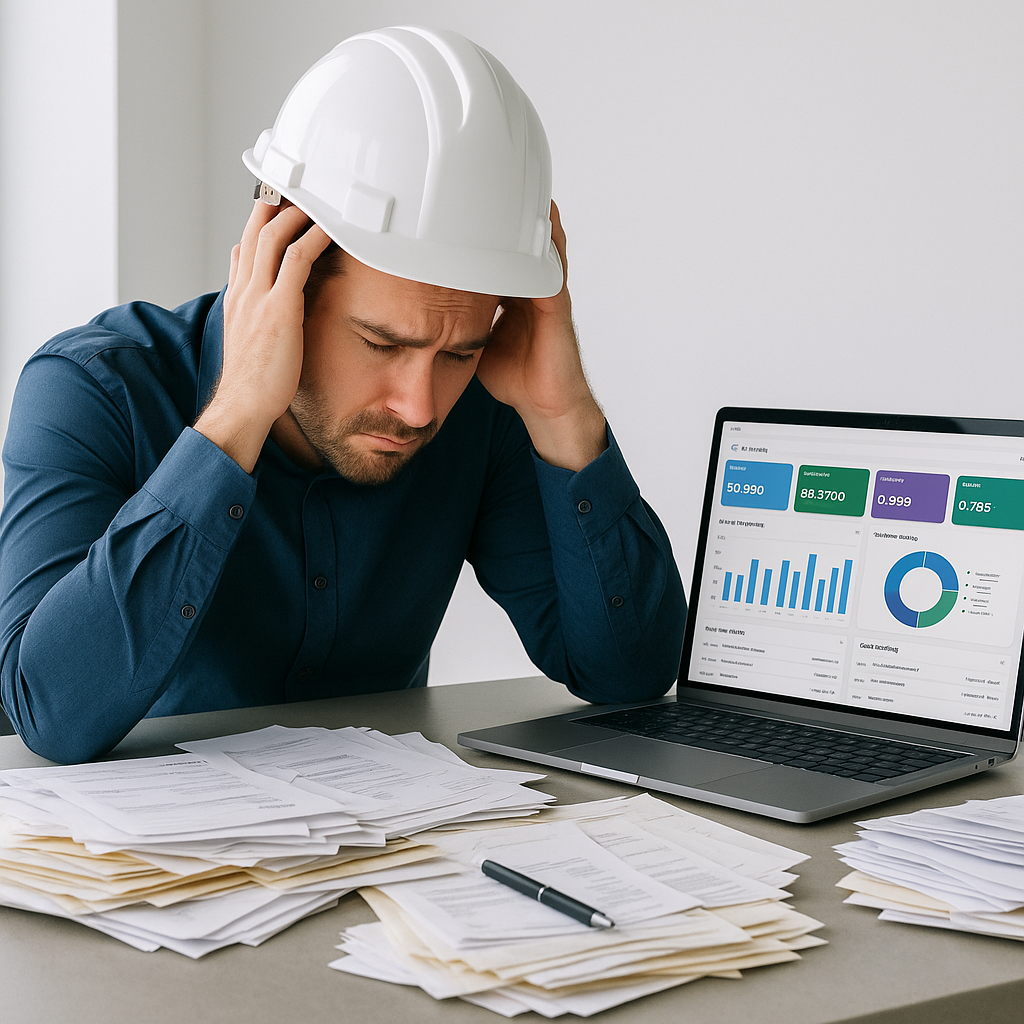
If you're a contractor working in India or the GCC, that's how much you could be losing annually. Why? Manual subcontractor cost control. It’s messy, slow, and error-prone. And the worst part? Most contractors don’t even realize how much these inefficiencies are costing them until it’s too late.
The Problem: Manual Processes Are Killing Margins
Let’s get real. Most subcontractor management systems are stuck in the 90s—or worse, in spreadsheets. You’re balancing dozens of procurement orders, tracking cost overruns manually, and dealing with approvals that take forever. Sound familiar? These inefficiencies don’t just cost you time; they burn through your project margins.
Concrete Example: The ₹1.2 Crore Loss
According to JobNext, contractors in India and GCC alone lose ₹1.2 crore annually because they can’t properly track subcontractor costs. These losses stem from:
- Inconsistent tracking of subcontractor invoices.
- Delays in approvals leading to penalty payments.
- Duplicate payments due to fragmented workflows.
Actionable Step: Audit your processes immediately. Start by evaluating how you track costs today—are invoices reconciled against purchase orders? Are there approval timelines in place? If not, this is your first red flag.
Data from the Field
A 2022 survey of 500 contractors in emerging markets found that 78% of companies using manual systems reported at least one major cost-overrun incident annually. These overruns averaged ₹35 lakh per incident. If this sounds like your projects, you’re not alone—but that doesn’t mean you can afford to ignore it.
Why Traditional ERPs Aren’t the Answer
“Why not just implement an ERP system?” you ask. Here's the problem: traditional ERP systems like FOUNDATION ERP are often rigid, slow to adapt, and built for older markets. They don’t understand the unique challenges of emerging regions like India or the GCC.
The Legacy ERP Bottleneck
Let’s break this down:
- Rigid Workflows: FOUNDATION ERP and similar systems require extensive customization to adapt to localized procurement and subcontractor payment practices. This customization often delays implementation by several months—or even years.
- High Costs: Traditional ERPs come with steep licensing fees, plus hidden costs for on-premises servers, IT staff, and updates.
- User Resistance: Contractors often report that their teams find legacy systems cumbersome and avoid using them altogether.
Case Study: A Foundation ERP Failure
A mid-sized contractor in Dubai implemented FOUNDATION ERP, only to find that their approval workflows couldn’t accommodate local labor laws requiring faster vendor payments. The result? ₹15 lakh in late payment penalties within the first year.
Actionable Step: Before committing to any ERP, ask for a trial run or demo that reflects your actual workflows, not generic templates. If it feels clunky during the demo, it will be worse in real life.
The Solution: SaaS ERP Built for Modern Contractors
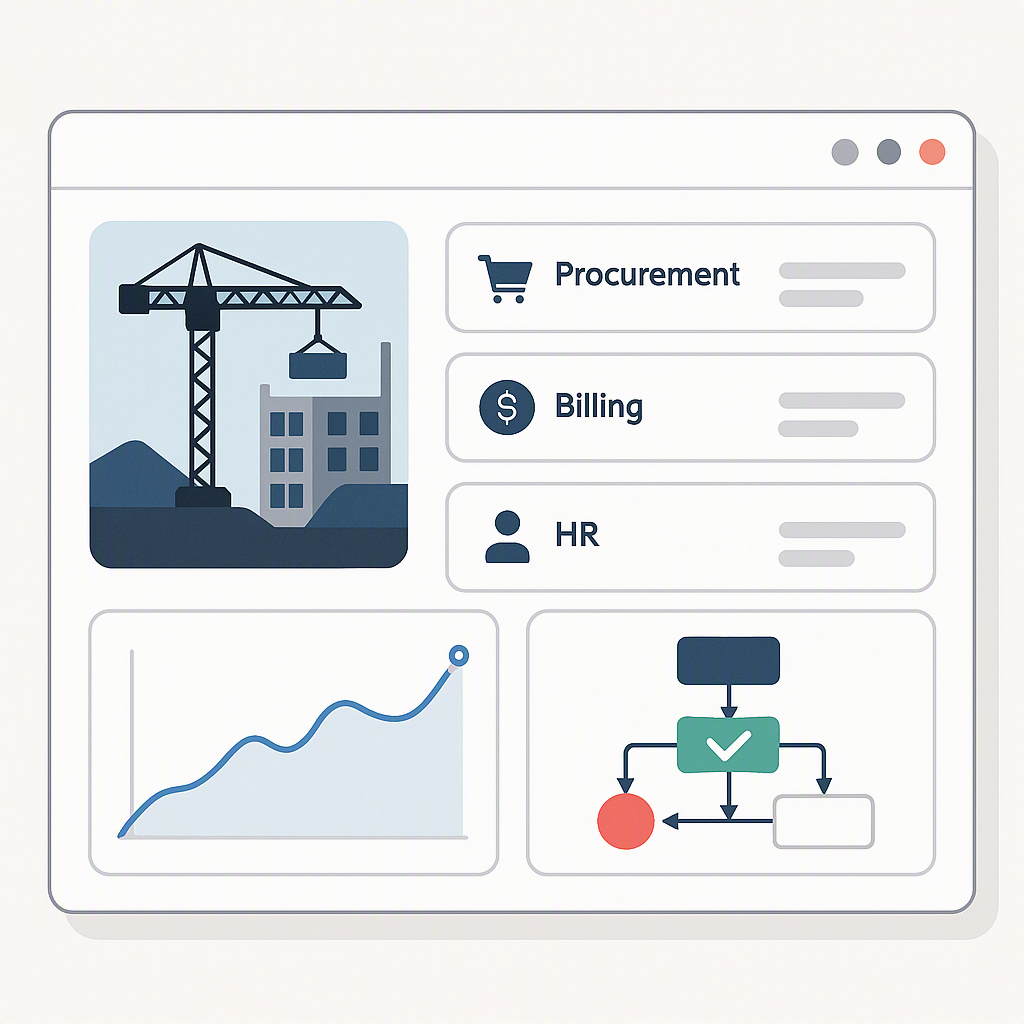
This is where SaaS ERP (cloud-based ERP) solutions come into play. Unlike traditional systems, SaaS platforms are designed to be flexible, scalable, and user-friendly.
What Makes SaaS ERP Different?
- Real-time cost tracking: Imagine knowing exactly how much you’ve spent on subcontractors at any given moment. No more guessing.
- Automated workflows: From approval chains to procurement, everything moves faster with fewer errors.
- Mobile accessibility: Need to make a decision on-site? Pull up the data on your phone. Done.
- Localized configurations: SaaS providers often offer templates and workflows tailored to regions like India and the GCC, cutting down implementation time.
Real-World Example: JobNext ERP
JobNext ERP is a SaaS-based platform specifically designed for emerging markets. Contractors who’ve switched to JobNext report:
- 30% reduction in procurement cycle times.
- 25% fewer invoice mismatches.
- ₹50 lakh annual savings on a ₹2.5 crore project.
Actionable Step: Schedule a demo with a SaaS ERP provider and ask them to show how their system handles your top three pain points. Look for automation, real-time reports, and ease of use.
Still Skeptical? Let’s Break Down the ROI
You might be thinking, “But won’t SaaS ERP systems cost me more upfront?” The obvious answer is yes, there’s an upfront cost. But here’s what most contractors overlook: the hidden savings.
ROI Breakdown
- Labour Costs: Automation reduces the need for manual tracking, saving ₹10-15 lakh annually in administrative overheads.
- Error Reduction: Eliminating duplicate payments and cost overruns saves an average of ₹20 lakh per year.
- Faster Approvals: Reduced delays mean fewer penalties and earlier project completions, translating into ₹15-20 lakh in potential savings.
By switching to SaaS ERP, contractors can expect to save at least 20% annually on operational inefficiencies.
Real-World Example: The ₹25 Lakh Procurement Fix
One contractor reported losing ₹25 lakh in a single year due to procurement chaos—materials ordered twice, approvals delayed, and vendors overbilling. After switching to JobNext ERP, they implemented:
- Automated purchase order matching.
- Tiered approval workflows.
- Vendor performance tracking.
Result? Their procurement-related losses dropped to under ₹3 lakh within the first year.
Actionable Step: Create a list of your top 3 procurement issues and ask potential SaaS ERP providers how their system addresses each one. If their answer feels vague, move on.
Why Waiting Will Cost You More
Every day you delay switching to a modern ERP, you’re bleeding money. It’s not just about fixing today’s inefficiencies; it’s about staying competitive.
Comparative Table: Traditional ERP vs. SaaS ERP
| Feature | Traditional ERP | SaaS ERP |
|---|---|---|
| Implementation Time | 6-12 months | 4-8 weeks |
| Cost | High upfront + ongoing | Subscription-based |
| Flexibility | Low | High |
| Mobile Access | Limited | Full |
| Localized Workflows | Rare | Common |
Contractors using cloud-based systems can bid more aggressively because they know their margins are solid. Can you?
If you're ready to stop losing margins to chaos, SaaS ERP can help. Get started with SoftNext Solutions today →
Learn more at JobNext.ai - Construction ERP