Why Procurement Chaos Costs Contractors Millions
If you've ever worked in construction, you know procurement can be a mess. Material requisitions scribbled on WhatsApp. Vendor quotes that disappear into email black holes. Purchase orders delayed because someone forgot an approval. Sound familiar?
For contractors, poor procurement processes lead to margin erosion—a fancy way of saying you're bleeding money. Materials are over-ordered or arrive late, projects stall, and vendors get paid for items you never even received. Worst of all, no one realizes the problem until it's too late.
According to a McKinsey report, inefficiencies in procurement and supply chain management account for as much as 30% of construction project costs. For example, a $10 million project could see $3 million lost to inefficiencies—a staggering hit to your profit margin.
The Fix: Structured Procurement Workflows
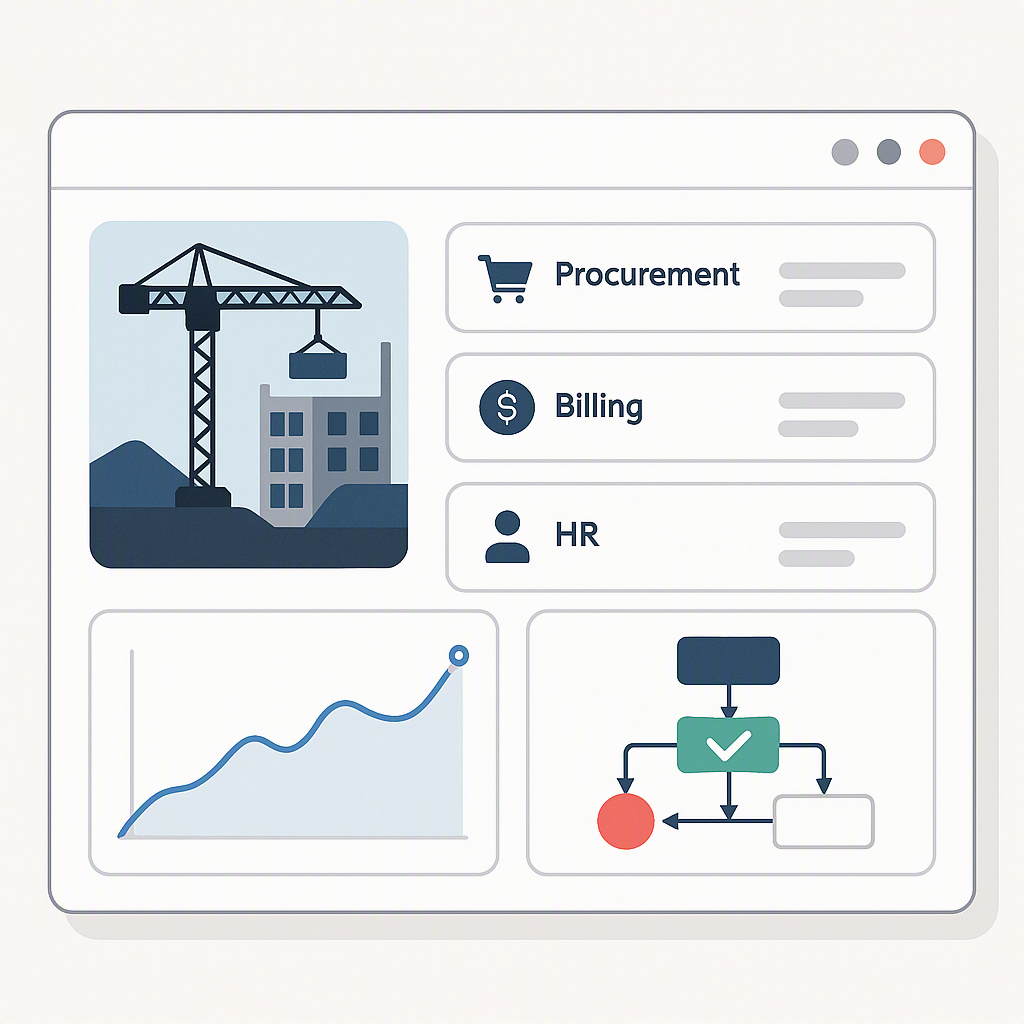
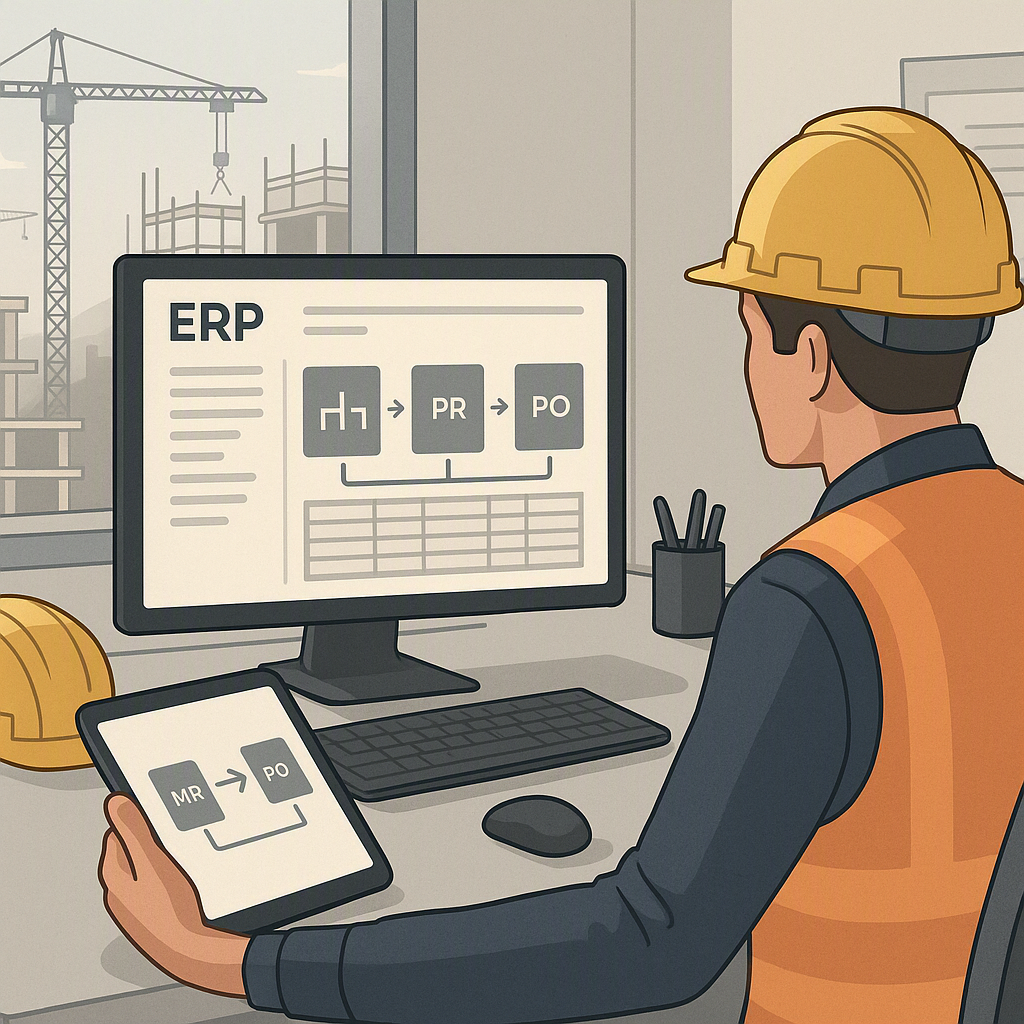
Enterprise software solutions tackle procurement chaos head-on. How? By enforcing a structured Material Requisition (MR) → Request for Quotation (RFQ) → Vendor Offer → Purchase Order (PO) workflow. No more missed steps, no more surprises.
Here’s how it works:
-
Material Requisition (MR): Every site raises an MR within the system. The software checks if the request aligns with the approved BOQ (Bill of Quantities). If it doesn’t, the request is flagged.
- Illustrative example: If a site requests 50 bags of cement but the BOQ allows only 30, the system immediately notifies the site manager. No more over-ordering "just in case."
-
Request for Quotation (RFQ): The approved MR triggers an RFQ, which is sent to pre-approved vendors through the vendor portal. Vendors submit their quotes directly into the system.
- Why this matters: You get all quotes in one place, making it easy to compare prices and terms. No more chasing vendors or losing quotes in email threads.
-
Vendor Offers & Negotiation: Once quotes are in, the system allows for side-by-side comparisons. Some platforms even let you negotiate directly within the system.
- Pro Tip: Always look for a platform that tracks historical vendor performance. Knowing who delivers late or overcharges is half the battle.
-
Purchase Order (PO): The selected vendor and terms auto-populate the PO. Multi-level approval workflows ensure no order goes forward without proper authorization.
- What this prevents: Unauthorized purchases and "urgent" buys that blow your budget.
Benefits of Structured Procurement
One of the biggest benefits of structured procurement is budget discipline. Every purchase is tied back to an approved budget or BOQ. This eliminates the "we’ll figure it out later" mindset that kills margins.
For instance, a 2021 survey by Deloitte found that 56% of construction firms using structured procurement software reported a 10–20% reduction in material costs within the first year of implementation. These savings can make or break a project’s profitability.
Common Missteps and How to Avoid Them
Even the best software won't work if you misuse it. Here are three common mistakes contractors make when implementing procurement workflows:
- Skipping Vendor Prequalification: Don’t onboard vendors on a whim. Use the software to manage vendor prequalification criteria like past performance, payment terms, and compliance records.
- Ignoring Historical Data: If your software tracks vendor performance, use it! Repeat business with unreliable vendors is a recipe for disaster.
- Bypassing Approval Chains: Enforce multi-level approvals strictly. Letting site managers bypass approvals "just this once" creates bad habits that snowball.
Final Thoughts
Procurement chaos doesn’t have to be your norm. With the right enterprise software, you can enforce structured workflows, reduce waste, and protect your margins. For example, a construction firm in Texas saved $1.2 million in procurement costs in 2022 by switching to a structured software platform. If procurement chaos is eating into your profits, it’s time to act. Explore enterprise software solutions to take control of your procurement process and improve your bottom line.
Learn more at JobNext.ai - Construction ERP